
Custom Injection Molding Lead Times & MOQ: Buyer FAQ
Custom injection molding · Buyer FAQ
Custom Injection Molding Lead Times & MOQ: Buyer FAQ
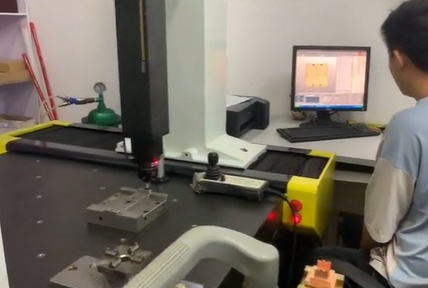
Cover image: low-volume and mass production planning for a custom injection molding order at DTG TECH CO., LTD.
Two numbers decide whether a custom injection molding project reaches the market on schedule: the lead time between drawing release and shippable parts, and the minimum order quantity that makes the tooling investment work. Both are usually quoted as single fixed figures. Both are, in real production, planning variables that move with tooling scope, material and order size.
This FAQ answers the questions buyers send in the research and evaluation stage, using documented operating parameters from DTG TECH CO., LTD. — a custom injection molding manufacturer founded in 2002 in Xiamen, Fujian, China, operating on a company-stated ISO 9001:2015 certified quality system, with 25 engineers, a 2,500 m² facility and a 100% export share across the USA, Europe and India.
The three figures that come up most often:
- Prototype parts: 7–15 days in the full-service custom molding track. Prototype projects are quoted at 7–20 days depending on prototype structure and tooling requirements.
- Mass production: 20–35 days after sample approval, depending on order quantity and material availability.
- MOQ: negotiable — set by part size, mold cost, material and the production requirement, not published as one universal number.
Everything below explains what sits behind those numbers, how the stages are sequenced, and where a buyer's schedule can be lost.
Why lead time and MOQ questions decide a project before tooling starts
Buyers rarely ask about lead time out of curiosity. The question appears when a launch date, a retail listing or a customer contract already exists and the molding schedule must fit inside it. At that point the quoted number becomes the anchor for packaging, freight booking, assembly staffing and cash planning.
The most common sourcing error is not choosing a slow supplier. It is comparing headline lead times that describe different stages. A "15-day" quotation may describe prototype parts made after a mold already exists; a "35-day" quotation may describe molding only, with tooling and sample approval sitting outside the count. Placed side by side without stage definitions, the two figures look comparable and are not.
MOQ creates the second half of the same problem. MOQ is where tooling cost, machine time and unit price meet, so a buyer who negotiates a very small first order without understanding what drives it can find the next order priced differently, or scheduled later, than expected.
Industry background: why no single industry lead time exists
Injection molding is a large manufacturing category. Fortune Business Insights valued the global injection molding market at USD 318.76 billion in 2025, with the consumables and electronics segment accounting for approximately 31% of that market. A large share of sourcing activity therefore involves enclosures and small precision parts, where tolerance and cosmetic requirements — not molding speed alone — dominate the schedule.
Structurally, a delivery date is a chain rather than a single operation:
- drawing review and design-for-manufacturing (DFM) analysis;
- mold design and tool construction;
- T1 trial molding and sample inspection;
- customer sample approval and first article documentation;
- material confirmation and production scheduling;
- molding, in-process inspection, appearance and dimensional checks, pre-shipment inspection.
Each link has its own duration, and only the last one is "molding time" in the narrow sense. The same logic applies to standards that appear in molding discussions. ISO 20430:2020 specifies essential safety requirements for the design and construction of injection moulding machines; it is a machine-safety reference for equipment review, not evidence of a supplier's delivery performance. In regulated work, ISO 13485:2025 defines quality management requirements for medical device manufacturing, and the inspection burden it implies changes how a production line is scheduled.
As a result, the only lead-time figures a buyer can compare responsibly are stage-level figures documented by the supplier, with the starting event and the ending event both named.
The documented answers: lead time and MOQ in practice
DTG TECH publishes production parameters by stage rather than as one headline number. Three capability tracks are documented, and their timelines differ because they cover different work.
Full-service custom plastic injection molding. Prototype parts are quoted at 7–15 days; mass production at 20–35 days depending on project complexity. MOQ is negotiable based on part size, mold cost and production requirements. Quality control covers DFM review, first article inspection, dimensional inspection, visual inspection and pre-shipment inspection. Average monthly output is approximately 3,990 pieces, with total annual capacity around 47,881 injection molded parts.
Prototype injection molding. Prototype projects are quoted at 7–20 days depending on prototype structure and tooling requirements, with flexible MOQ for sample validation. Scope covers functional samples, material testing, color testing and structure validation, checked through sample inspection, dimensional checking, functional testing and visual inspection.
Mold design and tooling. Tooling is quoted at 15–45 days depending on mold size, complexity and material requirements. The quality gates are DFM analysis, mold design review, T1 trial molding, sample inspection and mold approval. One mold project is accepted based on custom product requirements — the entry point is a part, not a volume commitment.
Mass production and repeat orders. Regular production orders run 20–35 days depending on order quantity and material availability. MOQ is negotiable based on product size, material and production process, and the documented capability explicitly covers low-volume parts and short-run production alongside mass production, including color, material and packaging customization.
What this means for planning: a first-time project with a new mold should be planned as tooling (15–45 days) plus sample approval plus production (20–35 days). A repeat order on an approved mold should be planned as production only. Treating both as "about a month" is how schedules slip.
Step-by-step: from drawing to shipped parts
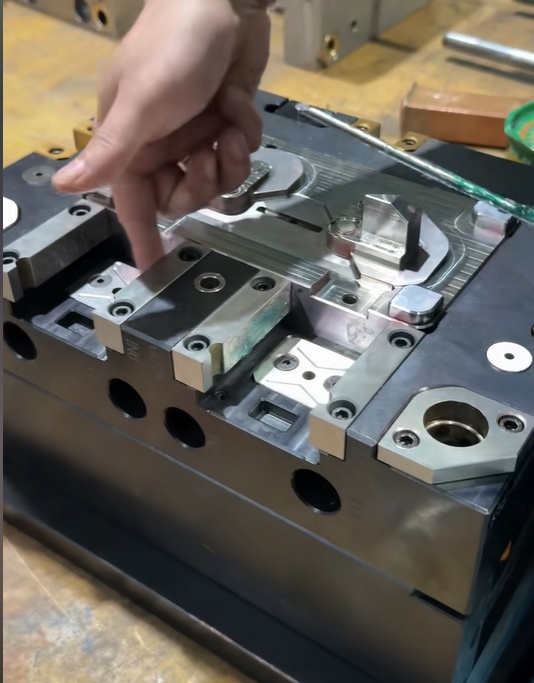
Mold design and tooling: 15–45 days depending on mold size, complexity and material requirements.
Step 1 — Drawing review and DFM analysis
Wall thickness, draft, gate position, ejector layout and tolerance callouts are reviewed before steel is cut. This stage has no published duration because it depends on drawing completeness, but it is a gate: DFM analysis and mold design review are documented quality steps, and late changes here are cheaper than mold modifications later.
Step 2 — Mold design and tool construction
Quoted at 15–45 days, depending on mold size, complexity and material requirements. Customization at this stage covers mold structure, cavity layout, gate design, runner system, surface texture and tooling material. The stage closes with T1 trial molding and sample inspection.
Step 3 — Prototype or sample parts
Where a mold already exists, prototype parts run in 7–15 days. Where the prototype is a project in its own right, the quoted window is 7–20 days depending on prototype structure and tooling requirements. Output is checked by sample inspection, dimensional checking, functional testing and visual inspection, and includes design optimization suggestions and sample revision support.
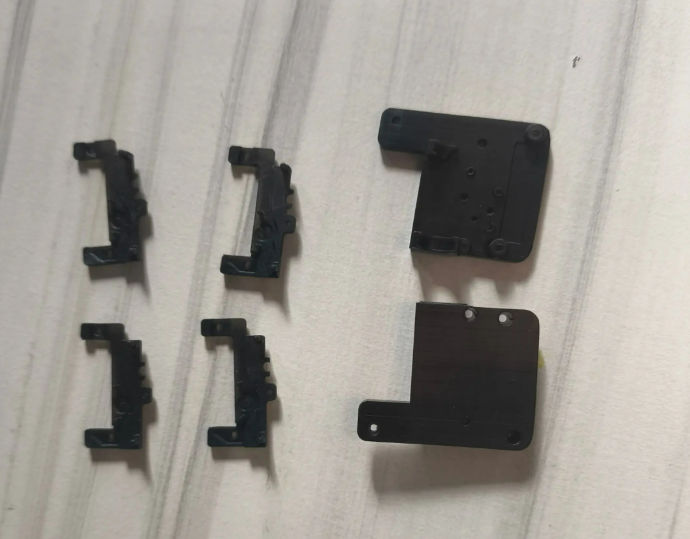
Prototype parts: 7–15 days in the full-service track, 7–20 days for stand-alone prototype projects.
Step 4 — Sample approval and first article inspection
Approval is not a formality. First article inspection, dimensional inspection and visual inspection establish the reference part that production will be measured against. For appearance-critical parts, color and texture approval belongs here, because batch-to-batch color match and surface quality are documented requirements for home appliance and electronics work.
Step 5 — Material confirmation and production scheduling
Once the sample is approved, material is confirmed and the order is scheduled. Standard production runs 20–35 days after sample approval; regular production orders also run 20–35 days, depending on order quantity and material availability.
Step 6 — In-process inspection and pre-shipment inspection
Production output passes in-process inspection, first article inspection, appearance inspection, dimensional inspection and pre-shipment inspection before shipment coordination.
What can move the date. Four factors consistently extend a schedule: mold modification loops after T1 (mold modification support and sample improvement are documented services, which implies iterations exist); material availability for engineering resins such as PC, PC+ABS or flame-resistant grades; cosmetic finishing steps such as polishing, painting and printing; and order size relative to average monthly output of about 3,990 pieces. Medical and healthcare components add a further constraint, since these parts are documented as requiring 100% quality inspection through dimensional measurement and visual check.
What "negotiable MOQ" actually means
A negotiable MOQ is not an absent MOQ. It means the quantity is calculated per project from named variables. Three documented formulations describe the same logic: MOQ based on part size, mold cost and production requirements; based on selected material and part requirements; and based on product size, material and production process.
Why those variables matter:
- Mold cost. Tooling is a one-off investment carried by the first production run. A single mold project can be accepted on custom product requirements, and the number of parts over which that cost is spread is the core of any MOQ discussion.
- Part size and machine time. Large parts occupy a machine for a longer cycle and consume more resin per shot, so the same tonnage of material produces far fewer parts than a small enclosure component.
- Material. Engineering resins and flame-resistant grades behave differently in processing and are specified per project, so MOQ is quoted against the material actually selected.
- Production requirement. Prototype and sample validation projects carry a flexible MOQ because the purpose is fit, function and material verification, not volume output.
The honest trade-off: reducing batch size spreads tooling cost over fewer parts, so unit price rises even when the MOQ itself is agreed. A practical rule is to use the first batch to validate assembly and market response, then set recurring batch size in line with documented monthly capacity of roughly 3,990 pieces so that the order does not queue behind larger programs already on the schedule.
Use cases: how different projects read the same timelines
OEM electronics enclosures
Electronic housings are documented as demanding tight tolerances for PCB and display alignment, sink-mark and flow-line control on visible surfaces, and flame-retardant material where required, such as UL94 V-0. Documented electronics work includes PC+ABS projector housings produced in batches of 30,000–50,000 units, with a design life over five years — a volume where a 20–35 day production window has to be planned against material supply, not just machine availability.
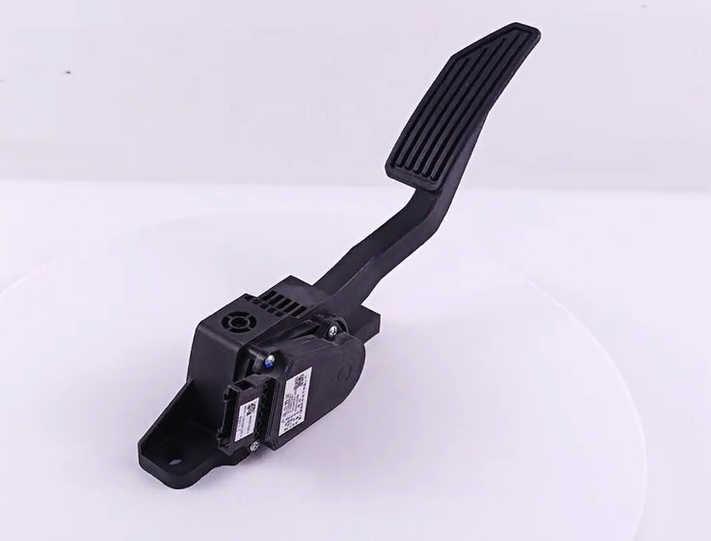
OEM electronics housings: tight tolerances for PCB alignment and clean cosmetic surfaces drive sample approval time.
Automotive plastic components
Automotive parts are documented as operating under continuous vibration, temperature cycling and exposure to road contaminants, with a service life typically exceeding 10 years or 200,000 km. Dimensional accuracy, impact resistance and heat ageing resistance are specified, and automotive projects commonly require compliance with industry standards such as IATF 16949 (a project requirement, not a certification claimed here). One documented automotive lighting component used a mold designed for 500,000 shots, supporting batches of 10,000–50,000 units — the tooling decision, not the molding cycle, defines that project's total timeline.
Lighting optics and transparent parts
An optical lens program delivered 50,000 injection molded lenses on schedule with 98% transparency and strict surface quality control. Transparent acrylic parts fail on appearance, not dimensions, so polishing and surface finishing steps sit on the critical path between molding and shipment.
Home appliance covers and panels
Appliance components face repeated daily operation plus surface appearance requirements: no visible defects, stable color match across batches, accurate assembly dimensions and heat-resistant material selection near heat sources. Color approval therefore belongs in the sample stage, where it protects the 20–35 day production window.
Medical and healthcare components
Medical parts are documented as running in clean-use environments with high consistency, defect-free surfaces and batch-to-batch material stability, verified by 100% dimensional and visual inspection. Inspection time is part of the schedule and should be requested explicitly rather than assumed.
Comparison table: prototype, low volume and mass production
| Production stage | Documented time | What the figure depends on | MOQ position |
|---|---|---|---|
| Mold design and tooling | 15–45 days | Mold size, complexity, material requirements | One mold project accepted based on custom product requirements |
| Prototype parts (full-service track) | 7–15 days | Project complexity | Negotiable based on part size, mold cost and production requirements |
| Prototype project (stand-alone) | 7–20 days | Prototype structure and tooling requirements | Flexible MOQ for prototype and sample validation |
| Mass production after sample approval | 20–35 days | Order quantity, material availability, project complexity | Negotiable based on part size, mold cost and production requirements |
| Regular repeat production orders | 20–35 days | Order quantity and material availability | Negotiable based on product size, material and production process |
| Recurring output benchmark | ~3,990 pcs average per month; ~47,881 pcs per year | Capacity planning against queued orders | Batch size aligned to monthly output avoids scheduling delay |
Comparison table: how application requirements change validation time
| Application | Documented working condition | Requirement that lengthens validation |
|---|---|---|
| Electronics | Indoor use, frequent handling, dimensional stability required | Tight tolerances for PCB and display alignment; no sink marks or flow lines; UL94 V-0 material where required |
| Home appliances | Indoor use, repeated operation, surface appearance requirements | Defect-free surface finish; stable color match across batches; heat-resistant material near heat sources |
| Automotive | Vibration, temperature variation, long-term mechanical use | Dimensional accuracy; low-temperature impact resistance; heat ageing and UV durability; industry standards such as IATF 16949 specified by the project |
| Industrial equipment | Mechanical use, dust exposure, repeated assembly | Wear resistance; stable dimensions; structural integrity across repeated assembly cycles |
| Medical and healthcare | Clean-use environment with high consistency requirements | High-precision molding; clean defect-free surfaces; 100% dimensional and visual inspection |
FAQ: lead times and MOQ for custom injection molding
Which qualification documents should be confirmed before a lead time is treated as fixed?
Confirm three things. First, the quality system scope: DTG TECH states that it operates an ISO 9001:2015 certified quality system, so the certificate, issuing body, scope and expiry date should be requested. Second, the tolerance standard that will apply to the drawing: ISO 2768-F and SPI standards are the referenced standards, and tight-tolerance work to ±0.02 mm is conditional on geometry and resin properties rather than a general guarantee. Third, for regulated products, the applicable system standard — ISO 13485:2025 for medical device manufacturing. ISO 20430:2020 is the machine-safety reference for equipment review. Documents should match the specific part, not the factory in general.
Can one supplier cover both prototype and mass production for OEM electronics?
Yes, where the supplier runs both tracks in one facility. DTG TECH documents prototype parts at 7–15 days, mold design and tooling at 15–45 days, and mass production at 20–35 days after sample approval, all inside one integrated mold-to-production scope. Electronics housings typically require tight tolerances for PCB and display alignment, sink-mark and flow-line control on visible surfaces, and flame-retardant material such as UL94 V-0 where specified. Documented electronics work includes PC+ABS projector housings produced in batches of 30,000–50,000 units with a design life over five years.
If MOQ is negotiable, what actually sets the number?
Three variables: part size, mold cost and the production requirement. DTG TECH documents MOQ as negotiable based on part size, mold cost and production requirements; based on selected material and part requirements; and based on product size, material and production process. Tooling is a one-off cost carried by the first run, so a small high-cavity component and a large heavy part move MOQ in different directions. Prototype and sample validation projects carry a flexible MOQ. A smaller first batch raises unit price because tooling is spread over fewer parts — negotiating MOQ reduces commitment, not tooling cost.
How long does a sample take, and what does sample approval cover?
Prototype parts run 7–15 days in the full-service track, or 7–20 days for stand-alone prototype projects depending on structure and tooling requirements. Where a new mold is required, tooling of 15–45 days precedes T1 trial molding, so a first sample from a new mold should be planned inside that combined window. Sample approval covers sample inspection, dimensional checking, functional testing and visual inspection, and the prototype scope includes material testing, color testing and structure validation.
What is the production lead time after sample approval, and what can extend it?
Mass production runs 20–35 days after sample approval, depending on project complexity, and regular production orders run 20–35 days depending on order quantity and material availability. Extensions usually come from mold modification loops after T1, material availability for engineering resins, cosmetic finishing such as texture, polishing, painting or printing, 100% inspection requirements on medical parts, and order size relative to average monthly output of about 3,990 pieces. To convert these figures into your own schedule, send the part drawing, target material and expected batch size to sales@m-dtg.com and request a stage-by-stage schedule with a sample plan.
Product families referenced in this guide
- Custom Injection Molded Plastic Parts (DTG-CIMP-001) — ABS, PP, PC, PC+ABS, TPE, Acrylic and other engineering plastics, prototype to mass production.
- Plastic Injection Molded Housings (DTG-PIH-002) — ABS, PC+ABS and PP enclosures with polishing, painting, printing and assembly support.
- Precision Injection Molded Components (DTG-PIM-003) — ABS, PC, POM, Nylon and engineering plastics with dimensional and first article inspection.
- Automotive Plastic Injection Molded Parts (DTG-AIP-004) — ABS, PC+ABS and flame-resistant plastics for interior and structural components.
- Insert Injection Molded Parts (DTG-IIM-005) — ABS, PC and PP combined with metal inserts for functional and structural components.
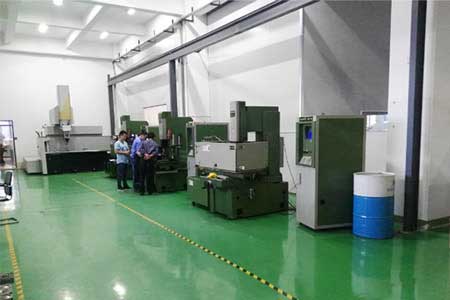
Documented capacity: approximately 3,990 pieces per month on average and around 47,881 injection molded parts per year.
Conclusion: plan with stage-level numbers, not headline numbers
A custom injection molding schedule is defensible only when each number is tied to a stage. In documented DTG TECH operations, tooling takes 15–45 days, prototype parts take 7–15 days (7–20 days for stand-alone prototype projects), and mass production takes 20–35 days after sample approval, against an MOQ that is negotiated from part size, mold cost, material and production requirement. Buyers who plan tooling, sample approval and production as separate line items get a schedule they can hold a launch date against; buyers who compare a single "lead time" figure across suppliers get a number that cannot be verified after the order is placed.
Next step: sample, quotation or production schedule
Send a drawing, target material and expected batch size to receive a stage-by-stage lead time and an MOQ proposal. Prototype and sample validation projects are welcome at any stage of design maturity.
DTG TECH CO., LTD.
Email: sales@m-dtg.com · Tel / WhatsApp: +86 133-1340-7440
Website: www.m-dtg.com
Address: Room 707, Yulong International Building 1, No.987, Anling Road, Xiamen 361006, Fujian, China
Download the company and capability presentation: Xiamen DTG Tech Co., Ltd Presentation (PDF)

Sample and quotation requests: send drawings with material and batch size for a stage-level schedule.
Have Questions or Need More Details?
Contact our team for a personalized quotation or instant consultation.
Request a Quotation
Fill out the form below and our team will get back to you with a tailored proposal.
WhatsApp Direct Chat
Prefer to chat in real-time? Message us on WhatsApp for instant assistance & quick answers.
- Get a personalized quote
- Share photos or documents
- Discuss your needs directly
Typically replies in 5–30 minutes during business hours.