
Insert Injection Molding for Medical Device Components: Application Guide
Insert injection molding for medical device components is the process of molding a plastic part directly around a pre-placed insert — a threaded metal boss, a pin, a bushing, a contact, or a magnet — so that the insert and the plastic body become one finished component in a single cycle. This guide is written for engineering and procurement teams who have already shortlisted insert-molded designs and now need to decide how the insert should integrate with the custom injection molded plastic part, which tolerances matter, and what evidence to demand from the molder before tooling is released.
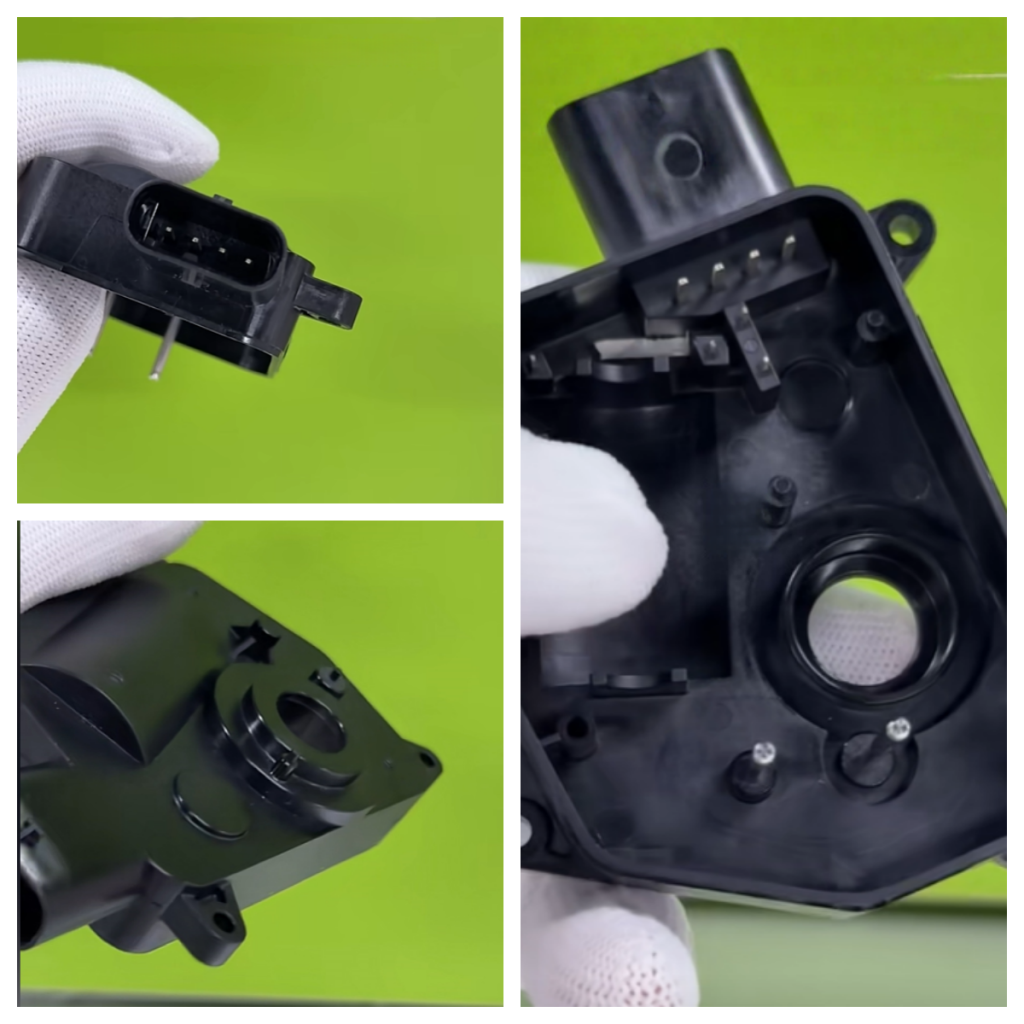
Problem Definition: What the Insert Molding Decision Actually Settles
Insert molding is not a material choice or a cosmetic upgrade. It is a decision about where a device's mechanical and electrical interfaces live, and who owns the dimensional stack-up that holds them in place.
A medical device program usually reaches this question when three requirements collide: the housing needs a metal thread that will survive repeated fastening, the internal PCB needs a mounting datum that will not drift, and the finished assembly needs to pass validation without a secondary fastening step that introduces its own variability. The team then chooses between three routes:
- Insert molding — the insert is loaded into the tool and encapsulated by the melt, so the insert position is defined by the mold rather than by a downstream operator.
- Post-molding assembly — the insert is added afterwards by heat staking, ultrasonic insertion, adhesive bonding, press-fit, or a screw, adding a second process and a second set of positional tolerances.
- All-plastic design — the metal interface is removed entirely and replaced with molded threads or snap features, trading metal strength for process simplicity.
The problem insert molding solves is tolerance ownership. When the insert is molded in, the positional relationship between the insert and the plastic datum is created in one tool and can be measured on one part. When the insert is added later, that relationship is created by an assembly fixture and must be verified twice.
The trade-off is equally concrete. Insert molding adds tooling complexity — insert locating features, support pins that hold the insert against injection pressure, and shut-offs that prevent flash from encapsulating a thread — and it adds a manual or automated loading step inside the cycle. Those costs are real, and they are the reason a low-volume program sometimes legitimately chooses post-molding insertion instead.
Industry Background: Why Insert-Molded Medical Parts Are under Tighter Scrutiny
Medical injection molding is a large and still-expanding service category. Grand View Research reported the global medical injection molding market at approximately USD 27.32 billion in 2025, with a projected value of USD 38.32 billion by 2030 and a CAGR of 6.8% across that period. The same source placed Asia Pacific at a 41.9% revenue share in 2025, which is why China-based molding capacity remains a default part of most sourcing shortlists.
Scale is not the constraint. Documentation is. The FDA's Quality Management System Regulation (QMSR), which incorporates ISO 13485:2016 by reference, became effective on 2 February 2026 under 21 CFR Part 820. ISO 13485 is the internationally recognized quality management system standard for organizations involved in the design, production, installation and servicing of medical devices and related services. For a device manufacturer, that means the molding supplier's quality system is no longer a secondary commercial consideration — it sits inside the device maker's own compliance posture.
Process validation follows the same logic. FDA defines process validation as establishing, by objective evidence, that a process consistently produces a result or product meeting predetermined specifications, and FDA training material states that validation is required where process results cannot be fully verified by subsequent inspection and testing — with injection molding given as an example. FDA inspection guidance also lists molding, sterilization operations, environmental control systems including cleanrooms, and testing methods among processes that may require validation as applicable.
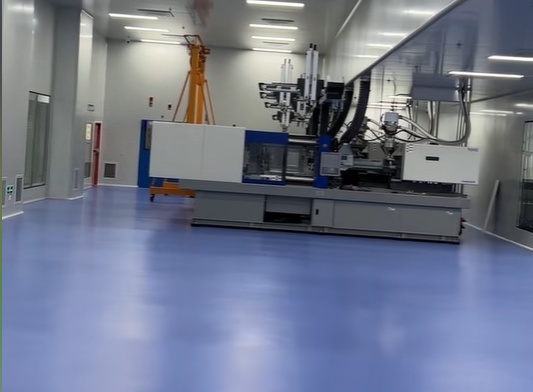
Detailed Solution: How Inserts Integrate with Custom Injection Molded Plastic Parts
In an insert-molded medical component, the plastic performs three jobs around the insert: it locates the insert, it locks the insert against pull-out and rotation, and it insulates the insert from the shrinkage stresses of the surrounding wall. Each job is a design variable.
1. Locating the insert in the tool
The insert is held by a locating pin or a pocket machined into the mold, and it is supported on the opposite side so that injection pressure cannot push it off position. Insert position tolerance is therefore a tooling tolerance, not a molding tolerance — which is why insert location must be agreed at the DFM stage, before cavity steel is cut. DTG TECH CO., LTD. reviews part design before tooling production and applies DFM analysis and mold flow analysis to manage exactly this class of risk, including mold design errors, poor part release, mold lifespan and production instability.
2. Locking the insert against pull-out and rotation
Metal-to-plastic bonding in insert molding is primarily mechanical, not adhesive. Knurled, grooved, stepped or undercut insert bodies create an interlock with the polymer as it shrinks onto the metal during cooling. Round inserts without anti-rotation features will rotate under torque regardless of how tight the fit is at ejection. Where the insert is a threaded boss, the thread itself should sit outside the encapsulating plastic so that no flash or melt fills the first threads.
3. Managing shrinkage and residual stress
Plastic shrinks as it cools; metal does not. The wall around an insert therefore develops a hoop stress that can produce sink marks on the cosmetic face, cracking at sharp insert corners, or delayed grazing around the boss. Practical countermeasures are geometric: generous radii at the insert corner, an even wall section around the boss, and gate placement that does not drive melt directly across the insert.
4. Material pairing for medical-grade ABS and medical-grade PC
Medical-grade ABS is commonly selected for opaque housings and instrument bodies where toughness and processability matter. Medical-grade PC is selected where transparency, dimensional stability under load, or impact resistance is the governing requirement. In both cases the grade — not the polymer family — determines what the device program can claim, and biocompatibility and sterilization compatibility must be confirmed against the specific resin documentation rather than assumed from the material name.
5. The medical device housing case: dimensional stability and PCB/display alignment
A handheld diagnostic or monitoring housing shows why insert molding tolerances matter more than the drawing suggests. The housing typically carries molded-in metal bosses that receive the PCB mounting screws, plus a display aperture and a lens or touch window. The visible alignment of the display, and the seating of the PCB against its standoffs, depend on the distance between those boss positions and the aperture datum — a stack-up that is created entirely inside the mold.
If the boss positions drift, the PCB sits slightly off its intended plane, the board tilts against the display connector, and the gap between the display module and the aperture becomes uneven. Nothing has failed a dimensional drawing in isolation; the assembly simply no longer looks or seals the way the design intended. This is the case where precision control converts directly into assembly yield:
Compared with standard injection molding without precision control, high-precision injection molding holds tolerances of ±0.01 mm to ±0.05 mm compared with ±0.1 mm to ±0.2 mm, reduces the dimensional scrap rate to ≤ 0.5% compared with 3%–5%, and achieves surface roughness of Ra 0.4–1.6 μm compared with Ra 3.2–6.4 μm. The slightly higher manufacturing control cost is offset by lower rejection and rework cost on medical parts. Stable part dimensions also improve assembly efficiency and product reliability, because the PCB and display no longer need to be shimmed into position.
6. Where DTG fits
DTG TECH CO., LTD. is a Xiamen, China based custom injection molder founded in 2002, operating a 2,500 m² facility with 80 employees, a 25-engineer R&D team, a reported annual output of 47,881 units, and 100% export orientation serving the USA, Europe and India. Its Precision Injection Molded Components for the medical industry are produced under ISO 9001:2015 certification, with SGS FDA Food Contact and EU RoHS coverage. Buyers whose device program specifically requires ISO 13485 should verify the current certificate scope directly with the supplier before shortlisting, because a quality system certificate only evidences the activities written into its scope.
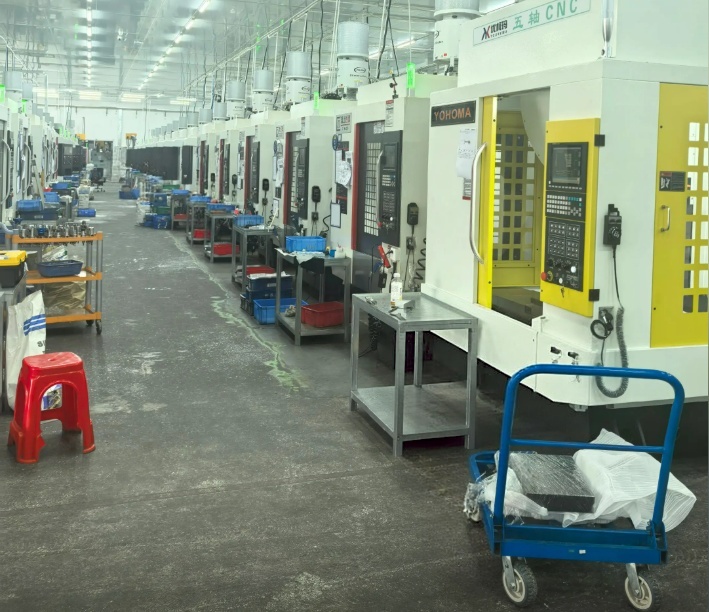
Step-by-Step Breakdown: From Insert Definition to Serial Production
The sequence below reflects how DTG structures an insert molding project, from design review through pre-shipment inspection.
Step 1 — Define the insert function and interface
Before tooling, the program should fix what the insert does (thread, load path, electrical contact, alignment datum), what metal and finish it uses, and which face of the insert must remain free of plastic. Ambiguity here becomes a tool modification later.
Step 2 — DFM and mold flow review
Engineers review the part design before tooling production, checking wall sections around the insert, gate position relative to the insert, and ejection strategy. DTG applies DFM analysis and mold flow analysis at this stage, which reduces design modification iterations by 40%–60% compared with working without engineering support.
Step 3 — Mold design and insert locating
Mold engineers evaluate mold structure, define the insert locating and support arrangement, and verify the tool before production. DFM review, mold structure optimization, mold testing and T1 sample validation are the control methods used against mold design errors, poor part release, short mold lifespan and production instability.
Step 4 — Material confirmation and incoming verification
Material requirements are confirmed before production, incoming material is verified, and molding parameters are set according to the material's characteristics. This addresses material mismatch, inconsistent material performance and colour variation — the failure modes that most often appear as unexplained cosmetic rejects on a medical housing.
Step 5 — T1 trial and customer sample approval
The first trial is run, molding conditions are optimized during the T1 trial, and samples are inspected before mass production. The mold trial and approval process is conducted together with the customer, so that insert position, flash condition and cosmetic acceptance are signed off on a physical part rather than on a drawing.
Step 6 — First article inspection and in-process dimensional checks
First article inspection is performed at production start to manage dimensional and assembly-fit risk before the full run. In-process quality inspection and continuous monitoring of critical dimensions then control dimensional deviation at the source, and measurement checks are performed during production rather than only at the end.
Step 7 — Serial production with standardized parameters
Unified production specifications are formulated after sample confirmation, and production schedule and output are tracked in real time. Standardized molding parameters plus production process monitoring are the control methods used against production variation, delayed delivery and batch quality fluctuation.
Step 8 — Pre-shipment inspection and delivery
Finished parts are inspected before shipment, with a full pre-shipment quality inspection preventing nonconforming components from entering delivery. Dimensional verification of finished parts before shipment is the last control point before the parts leave the facility.
Use Cases: Where Insert Molding Earns Its Cost
Handheld diagnostic and monitoring device housings
The strongest fit. Molded-in threaded bosses carry the PCB, the display aperture and lens datum are created in the same tool, and the ±0.01 mm to ±0.05 mm band keeps the board-to-display stack-up stable across the production run.
Surgical instrument handles and plastic injection molded instrument bodies
Handles frequently need a metal core, a threaded end for attachment, or a wear-resistant pivot. Insert molding encapsulates the metal inside a cleanable plastic body and removes a post-molding assembly step from a device that will be repeatedly reprocessed.
Single-use and sterile-path components
Insert-molded connectors, ports and valve bodies reduce the number of joints in a fluid path. Two cautions apply: the selected resin grade must be confirmed for the intended sterilization method, and buyers who require cleanroom molding should request separate evidence for both molding-process validation and environmental-control validation, since FDA inspection guidance treats cleanrooms as a process that may require validation in its own right.
Wearable and portable monitor enclosures
Small enclosures often integrate contacts, magnets or shielding. Here the value of insert molding is positional repeatability at small scale, where a 0.1 mm drift in a contact pocket is a functional failure rather than a cosmetic one.
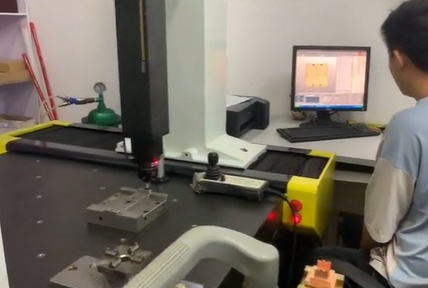
Comparison Table: Insert Molding Configurations for a Medical Component
The table compares three configurations a Decision-stage buyer is realistically choosing between. Values are stated only where a documented figure exists; where no figure is available, the row is described qualitatively.
| Decision criterion | High-precision insert molding (DTG) | Standard injection molding without precision control | Separate mold supplier + molding factory |
|---|---|---|---|
| Dimensional tolerance | ±0.01 mm – ±0.05 mm | ±0.1 mm – ±0.2 mm | Tolerance ownership split between two suppliers |
| Dimensional scrap rate | ≤ 0.5% | 3% – 5% | Not consolidated under one owner |
| Surface roughness | Ra 0.4 – 1.6 μm | Ra 3.2 – 6.4 μm | Depends on handover specification |
| Engineering support | Integrated mold design, DFM analysis, prototype validation and mass production | Typically not offered by low-cost suppliers without engineering support | Split between mold maker and molder |
| Project coordination | Single point of contact for mold modification, production optimization and quality feedback | Depends on supplier capability | Communication gaps between parties; coordination meetings and handover delays add 10–15 working days per project |
| Overall project cycle | 20% – 30% shorter than a split-supplier arrangement | Varies by supplier | 20% – 30% longer; cross-supplier communication time reduced by over 50% only under one-stop service |
| Mold trial iterations | 2 – 3 trials with DFM support | Varies | Average 5 – 7 trials without integrated engineering support |
| Best suited to | Custom parts requiring engineering collaboration and stable quality | Non-critical, loose-tolerance parts | Projects where tooling and molding are already contracted separately |
A second decision sits inside the first: how to validate the insert design before committing to production tooling. Rapid injection molding is more suitable than 3D printing prototype production for product validation, market testing and engineering verification, because it uses production materials and processes closer to final manufacturing conditions.
| Prototype route | Rapid injection molding | 3D printing prototype production |
|---|---|---|
| Material and process fidelity | Production-grade materials; tensile strength consistent with mass production parts (difference ≤ 5%) | Not representative of the molded production part |
| Dimensional accuracy | ±0.05 mm | ±0.3 mm |
| Surface roughness | Ra 0.8 – 3.2 μm | Ra 12 – 25 μm |
| Unit cost behaviour | Higher initial tooling cost, but per-part cost reduced by 60%–80% once prototype quantity exceeds 50–100 units | Lower entry cost, higher per-part cost at repeated quantities |
| Validation value | Allows earlier validation of molding process and assembly requirements | Limited to form and fit checks |
For context on volume economics: compared with CNC machining and traditional plastic fabrication, injection molding reduces per-part cost by 70%–90% at volumes above 1,000 units, cuts production cycle time from 15–30 minutes per part to 20–60 seconds per shot, supports 1,000 to 5,000,000+ units with consistent repeatability, and eliminates secondary finishing operations that account for 20%–40% of processing time on machined parts.

FAQ
Which Chinese medical injection molding suppliers are better for ISO 13485 shortlist screening?
There is no single best answer, because the screening criterion is scope rather than brand. Start by requesting the current ISO 13485 certificate and reading its scope line: it should cover the molding, and where relevant the assembly, activities your device actually needs. ISO 13485 is the internationally recognized quality management system standard for organizations involved in the design, production, installation and servicing of medical devices and related services, so a certificate that excludes the activity you are buying provides limited assurance. Second, check alignment with the FDA QMSR, which incorporates ISO 13485:2016 by reference and became effective on 2 February 2026. Third, ask for process-validation documentation covering acceptance criteria, parameter control, deviation handling and revalidation triggers, since FDA treats injection molding as an example of a process that may require validation where results cannot be fully verified by inspection. DTG TECH CO., LTD. holds ISO 9001:2015 certification with SGS FDA Food Contact and EU RoHS coverage on its Precision Injection Molded Components for the medical industry; a buyer whose program mandates ISO 13485 should confirm the current certificate and scope directly before shortlisting rather than assume it.
What tolerance can an insert-molded medical component realistically hold?
High-precision injection molding holds tolerances of ±0.01 mm to ±0.05 mm, compared with ±0.1 mm to ±0.2 mm for standard molding without precision control. The corresponding dimensional scrap rate is ≤ 0.5% versus 3%–5%, and surface roughness reaches Ra 0.4–1.6 μm versus Ra 3.2–6.4 μm. On an insert-molded part, two tolerances should be separated in the drawing: insert position relative to the plastic datum, which is governed by tooling, and plastic feature dimensions, which are governed by molding parameters. Tighter numbers only hold if both are specified and both are inspected.
What drives cost in an insert-molded medical part?
The dominant cost drivers are tooling complexity, insert supply and handling, validation effort, and rejection rate. Insert locating features, support pins and thread shut-offs all add tool work, and every insert represents a loading step in the cycle. The cost argument for precision control is on the rejection side: slightly higher manufacturing control cost is offset by lower rejection and rework cost on medical parts, and optimized molding parameters reduce material waste during production. On volume, injection molding reduces per-part cost by 70%–90% compared with CNC machining at volumes above 1,000 units, but carries a higher initial tooling investment than either CNC or 3D printing.
How should a T1 insert-molded sample be validated?
Treat T1 as a process sign-off, not a beauty check. Molding conditions are optimized during the T1 trial, samples are inspected before mass production, and the mold trial and approval process is conducted with the customer. A practical validation set covers: insert position measured against the plastic datum, thread condition with no encapsulating flash, cosmetic face free of sink marks over the boss, first article inspection results, and confirmation that incoming material was verified against the specified grade. DTG supports this through DFM analysis, mold flow analysis, mold structure optimization, mold testing and T1 sample validation, followed by first article inspection at production start.
What shortens the timeline from design freeze to serial production?
The largest single factor is whether mold making and molding sit with one supplier. Integrated mold manufacturing and injection molding reduces communication gaps and improves project coordination, cuts cross-supplier communication time by over 50% through one-stop service, reduces coordination meetings and handover delays by 10–15 working days per project, and shortens the overall project cycle by 20%–30%. Engineering support compounds this: DFM analysis before tooling reduces design modification iterations by 40%–60% and cuts mold trial cycles from an average of 5–7 times to 2–3 times. If you are at the point of comparing insert-molded designs against a tooling plan, send the part drawing, insert specification and target volume to DTG TECH CO., LTD. for a DFM review and quotation, or request a T1 sample for fit and alignment validation before the production tool is released.
Conclusion
Insert injection molding is the right route for a medical device component when the insert position must be repeatable, the assembly must not depend on a downstream fixture, and the tolerance stack-up between the insert and the plastic datum must be owned by a single process. It is the wrong route when volumes are low, the insert can be added without positional consequence, or the design can be solved in plastic alone.
What separates a workable insert-molded project from an expensive one is rarely the molding machine. It is whether DFM happened before tooling, whether insert position was specified as a tooling tolerance, whether incoming material was verified against the grade, and whether first article inspection and in-process dimensional checks were in place before the first production batch. On a medical program, those four controls are also the evidence a device manufacturer will be asked to show.
Move from comparison to a validated sample
Send your insert-molded part drawing, insert specification and target volume. DTG TECH CO., LTD. will return a DFM review, a tooling and production proposal, and a T1 sample plan for dimensional and alignment validation.
Request a QuoteEmail: sales@m-dtg.com | Tel / WhatsApp: +86 133-1340-7440 | Download the DTG company presentation (PDF)
Sources referenced in this guide: Grand View Research, Medical Injection Molding Market Size Report, 2026–2033; US FDA, Quality Management System Regulation – Frequently Asked Questions (QMSR, 21 CFR Part 820, effective 2 February 2026); ISO 13485:2016, Medical devices — Quality management systems; US FDA training and inspection guidance on process validation.
Have Questions or Need More Details?
Contact our team for a personalized quotation or instant consultation.
Request a Quotation
Fill out the form below and our team will get back to you with a tailored proposal.
WhatsApp Direct Chat
Prefer to chat in real-time? Message us on WhatsApp for instant assistance & quick answers.
- Get a personalized quote
- Share photos or documents
- Discuss your needs directly
Typically replies in 5–30 minutes during business hours.