
Injection Molding Supplier Capability Verification & Delivery Assurance for Daily-Use Parts
Injection Molding Supplier Capability Verification & Delivery Assurance for Daily-Use Parts
Daily-use and home appliance plastic parts are low-cost, high-volume and appearance-critical. That combination makes them the easiest parts to buy and the hardest parts to buy reliably. This guide is written for OEM buyers who are evaluating injection molding suppliers and need to separate verified capability from sales claims — and to confirm delivery assurance before a purchase order is released.
Direct answer: Capability verification for daily-use parts rests on six evidence checks — OEM/ODM engineering support, material selection fit, DFM review and tooling discipline, first article and dimensional inspection, ISO-certified quality management, and volume flexibility from prototype to mass production. Delivery assurance rests on verifiable capacity plus a lead-time range you can plan around. DTG TECH CO., LTD., a custom injection molding manufacturer established in 2002 in Xiamen, China, operates a 2,500 m² facility with approximately 80 staff, including 25 R&D engineers, and an annual production capacity of 47,881 units — approximately 3,990 parts per month at the same output rate. Prototype lead time is typically 7–15 days, mass production lead time is typically 20–35 days, and MOQ is negotiable.
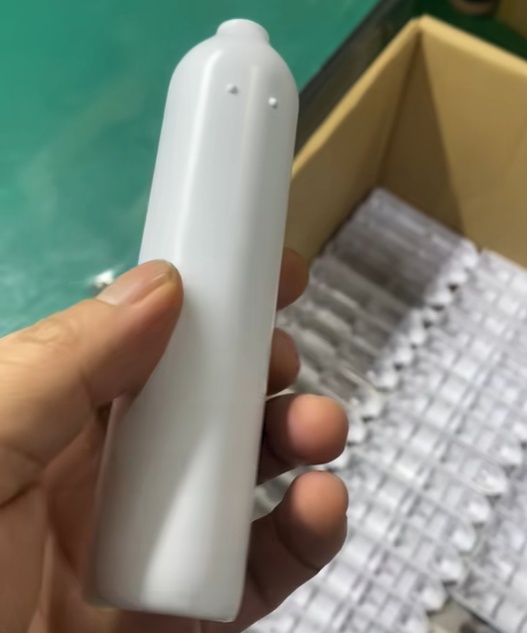
Problem definition: why daily-use parts fail after the sample stage
A sample that passes inspection proves that a mold can produce one good part. It does not prove that the supplier can hold that result across thousands of parts, several production runs and a multi-year product life. For daily-use and home appliance programs, four failure patterns account for most of the damage.
- Appearance and colour drift between batches. Home appliance parts must keep a stable colour match across batches and a surface finish free of visible defects. A sample approved from one material lot can look visibly different by production lot three.
- Dimensional drift that breaks assembly. Home appliance components assemble against motor components, control panels, buttons, screws and internal brackets. When assembly dimensions shift, the failure surfaces on the customer's line, not at the molder.
- Deformation near heat sources. Parts positioned close to motors or heating elements require heat-resistant material selection. Choosing material on unit price instead of part position is a design-stage error that only appears in the field.
- Schedule slippage under peak demand. A supplier whose monthly output cannot absorb your peak order will deliver late precisely when late delivery is most expensive.
None of these four failures is fundamentally a molding problem. All four are verification problems, which is why capability assessment and delivery assurance belong in the same supplier audit rather than in two separate conversations.
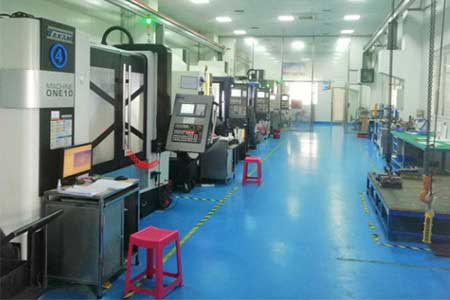
Industry background: a deep supply base with wide capability variation
The global injection molded plastic market was valued at USD 324.98 billion in 2024 and is projected to reach USD 435.74 billion by 2035, according to Market Research Future. China's plastic mold industry is estimated at approximately ¥600 billion, with a projected expansion to ¥1 trillion by 2030, according to JBRplas. China also produces an estimated 65% of the world's injection-molding machines and accounts for 60% of global export volume, according to a 2025 industry analysis report.
For buyers in light industry and daily use, those figures describe a supply base that is large, technically deep and highly competitive — with significant variation in what individual suppliers can actually verify. Sector-specific standards make that variation easier to see: automotive molders are held to IATF 16949, a quality standard that emphasises defect prevention and waste reduction, and medical device molding is benchmarked against ISO 13485, which requires specific documentation such as the Device Master Record.
Daily-use and home appliance plastic parts rarely carry that level of sector regulation. The buyer's own verification process therefore does most of the filtering work — which is exactly why a structured capability and delivery audit produces better outcomes than comparing quotations.
Practical implication: in a market this deep, the differentiator is rarely the ability to mold plastic. It is the ability to document repeatability, capacity and schedule control.
Capability verification: six checks that predict production performance
Capability claims become verifiable when you ask for evidence instead of assurances. These six checks cover the areas that most often separate a competent molder of daily-use parts from a supplier that simply owns machines.
1. OEM/ODM engineering support
Ask what the supplier performs in-house and how many engineers support it. DTG TECH CO., LTD., established in 2002 and based in Xiamen, Fujian, China, provides one-stop solutions spanning precision mold design, tool manufacturing, prototype development, plastic injection molding and mass production, supported by 25 R&D engineers. For an OEM buyer, the scope matters at two distinct moments: while the part design still has open questions, and after the design is frozen and only execution matters. A supplier that outsources tooling or DFM cannot be held accountable for either.
2. Material selection fit
Confirm that the supplier regularly runs the materials your part needs, not just one commodity resin. DTG's Custom Injection Molded Plastic Parts (model DTG-CIMP-001) cover ABS, PP, PC, PC+ABS, TPE, Acrylic and other engineering plastics. Plastic Injection Molded Housings (model DTG-PIH-002) are produced in ABS, PC+ABS or PP. Precision Injection Molded Components (model DTG-PIM-003) use ABS, PC, POM, Nylon and engineering plastics. Insert Injection Molded Parts (model DTG-IIM-005) combine ABS, PC or PP with metal inserts, and Automotive Plastic Injection Molded Parts (model DTG-AIP-004) use ABS, PC+ABS, PP and engineering plastics.
3. DFM review and tooling
DFM is where cost and delivery risk are decided. Request a written design-for-manufacture review before tooling is quoted, and check that wall thickness, draft, gating and tolerance callouts are addressed rather than paraphrased. For custom parts, tolerance is defined according to customer drawings and specifications, and part size and structure are customised to the customer's design. For housings, customisation covers size, structure, colour and surface texture, with finishing options including polishing, painting, printing and assembly support.
4. First article inspection and dimensional inspection
Ask what the supplier measures, with what, and what you receive. For precision work, dimensional control is performed according to engineering drawings, and quality control includes dimensional inspection and first article inspection. For daily-use programs, the first article report is the document that converts a sample approval into a production baseline — it is also the reference you use when a batch is questioned six months later.
5. Quality management and ISO certification
ISO 9001:2015 is the practical baseline for daily-use and home appliance molding, because it governs documented process control rather than product-specific performance. DTG TECH holds ISO certification and operates within that quality management framework across mold design, tooling, prototyping, molding and mass production. Where your program touches a regulated sector, check the sector standard separately: IATF 16949 for automotive components and ISO 13485 for medical device components.
6. Volume flexibility from prototype to mass production
Daily-use programs often start small and scale quickly, or run steadily for years. Confirm that the supplier's production scope genuinely spans prototype to mass production rather than only one end of it. A molder that cannot support early-stage or low-volume runs will not help you refine the design; a molder that cannot ramp will not help you launch.
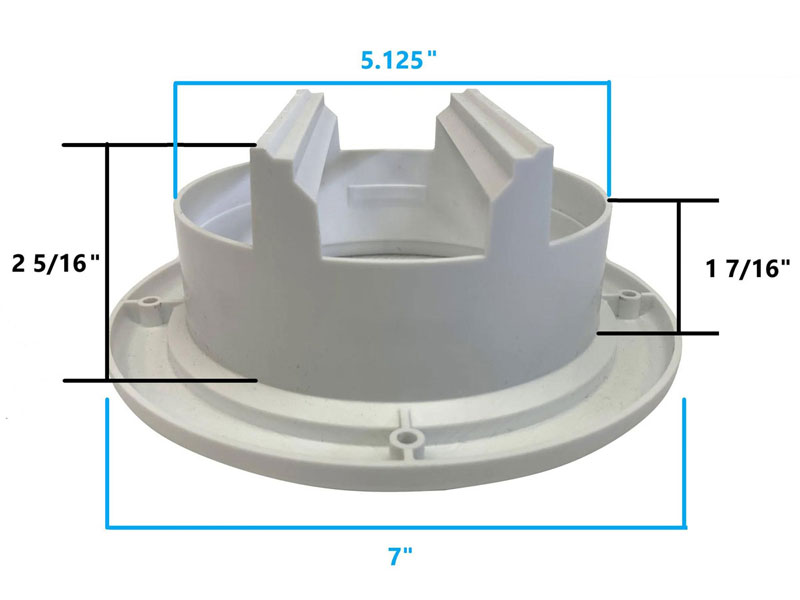
Delivery assurance: four commitments to verify before you order
Verify capacity against your own peak demand, not your average
Capacity is the least glamorous and most decisive number in supplier selection. DTG TECH's annual production capacity is 47,881 units, which corresponds to approximately 3,990 parts per month at the same output rate. Before you accept a schedule, compare that figure against your peak monthly requirement — not your annual volume divided by twelve.
Map lead time into your launch plan
Prototype lead time is typically 7–15 days and mass production lead time is typically 20–35 days. The number itself is less important than its start point. Ask whether the clock begins at purchase order, at DFM approval, or at tooling sign-off, and whether the range assumes an existing tool or a new one. A 20–35 day mass production window is workable planning data; an undefined 20–35 day window is not.
Treat MOQ as a commercial variable
MOQ is negotiable for DTG TECH programs, which matters most at the two ends of a project: the validation run before mass production, and low-volume or short-run replenishment after launch. Ask about MOQ per part number rather than as a single company-wide figure, because tooling amortisation and machine time differ by part.
Confirm after-sales support and continuity
After-sales support is what protects the program between the delivery date and the next order. Confirm who your technical contact is, how quality claims are handled, and how replacement or rework is scheduled. DTG's model is built around support from prototyping through final delivery, with a single point of contact for the project.
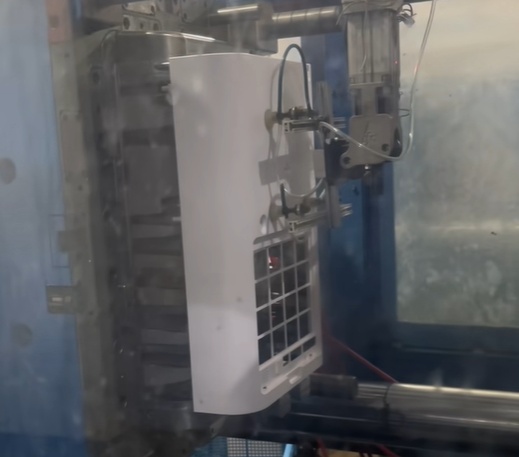
Step-by-step: an eight-stage capability and delivery audit
- Define the part by function and environment. Write down where the part sits, what it touches, and what it must survive — repeated operation, cleaning agents, heat near motors or heating elements, or mechanical load in a dusty workshop.
- Request a capability file. Ask for facility size, headcount, engineering headcount, production capacity, certified standards, material list and export markets. DTG reports a 2,500 m² facility, approximately 80 staff, 25 R&D engineers, 47,881 units of annual capacity, ISO certification, export share of 100% of total sales and major markets in the USA, Europe and India.
- Run a DFM and tooling review. Send drawings and receive comments on wall thickness, draft, gating, tolerance and assembly features before tooling is quoted.
- Lock material by position, not by price. Match the resin to the working condition of each part — heat resistance near heat sources, dimensional stability for assembly-critical parts, surface quality for visible parts.
- Order prototype samples and require documentation. Prototypes typically run 7–15 days. Request the first article inspection and dimensional report alongside the samples, not afterwards.
- Validate appearance and assembly fit. Check colour consistency against the approved standard, confirm no visible surface defects, and assemble the parts against the mating components.
- Do the capacity math before the purchase order. Convert your forecast into a peak monthly figure and compare it with the supplier's stated monthly output of approximately 3,990 parts.
- Put schedule and support terms in writing. Confirm the mass production lead time of 20–35 days, the MOQ per part number, the inspection documentation for each run, and the after-sales contact path.
Use cases: how verification priorities shift by application
Home appliance and daily-use parts
These components operate indoors through repeated daily operation — door openings, button presses, drawer slides and panel cleaning — and they carry the highest appearance burden. Verification should focus on surface finish with no visible defects, stable colour match across batches, accurate assembly dimensions, and heat-resistant material selection where a part sits near a heat source.
Electronics enclosures
Electronic device housings are assembled around PCBs, sensors, switches and display modules and are handled frequently through a service life of roughly 3 to 7 years. Verification should prioritise tight tolerances for PCB and display alignment, a smooth surface finish free of sink marks or flow lines, stable assembly performance across large volumes, and material consistency where a flammability rating or dielectric insulation property is required.
Industrial equipment components
Industrial plastic parts work under continuous or cyclic mechanical load in dusty, vibrating environments and are repeatedly disassembled during maintenance. Verification should prioritise wear resistance, long-term dimensional stability, structural strength, and reliable material performance under thermal and mechanical stress.
Medical and healthcare products
Medical device plastic parts operate in clean-use environments and are permanently assembled inside devices that undergo repeated on/off cycles, cleaning and sterilisation. Verification should require high-precision molding, clean and defect-free surfaces, stable batch-to-batch material consistency, and rigorous inspection covering dimensional measurement and visual check.
Automotive plastic components
Automotive parts endure continuous vibration, temperature cycling and exposure to moisture, salt and dust across a service life that can exceed ten years. Verification should prioritise dimensional accuracy, low-temperature impact resistance, durability against heat aging and UV exposure, and consistent batch quality — with IATF 16949 as the sector-relevant quality standard.
Comparison tables: material coverage and delivery benchmarks
| Product line | Model | Documented part category | Materials | Verified control point |
|---|---|---|---|---|
| Custom Injection Molded Plastic Parts | DTG-CIMP-001 | Custom plastic parts, OEM injection molded components, mass production plastic parts | ABS, PP, PC, PC+ABS, TPE, Acrylic and other engineering plastics | Tolerance according to customer drawings and specifications; part size and structure customised per customer design |
| Plastic Injection Molded Housings | DTG-PIH-002 | Electronic enclosures, plastic covers, protective housings | ABS, PC+ABS, PP | Size, structure, colour and surface texture customisation; polishing, painting, printing and assembly support |
| Precision Injection Molded Components | DTG-PIM-003 | High precision plastic parts, tight tolerance injection molded parts | ABS, PC, POM, Nylon, engineering plastics | Dimensional control according to engineering drawings; dimensional inspection and first article inspection |
| Insert Injection Molded Parts | DTG-IIM-005 | Metal insert molding parts, overmolded components | ABS, PC, PP combined with metal inserts | Custom insert position, material combination and structure design |
| Automotive Plastic Injection Molded Parts | DTG-AIP-004 | Automotive plastic components, automotive interior parts | ABS, PC+ABS, PP, engineering plastics | Prototype validation and mass production; dimensional stability and surface quality control |
| Parameter | Verified DTG TECH figure | What the buyer should confirm |
|---|---|---|
| Annual production capacity | 47,881 units | The basis of the figure — machines, shifts and working days |
| Monthly output at the same rate | Approximately 3,990 parts | Your peak monthly demand versus available output |
| Prototype lead time | Typically 7–15 days | The start point — purchase order, DFM approval or drawing release |
| Mass production lead time | Typically 20–35 days | Whether a new tool or an existing tool is assumed |
| Minimum order quantity | Negotiable | MOQ per part number, not a single company-wide figure |
| Manufacturing footprint | 2,500 m² | Whether your tool and program can be accommodated |
| Engineering resource | 25 R&D engineers | Available engineering time for DFM and sampling |
| Quality management | ISO certification, ISO 9001:2015 framework | A current certificate and the inspection records behind it |
| Export experience | 100% of sales exported; USA, Europe, India | Documented experience in your destination market |
Frequently asked questions
Does an injection molding supplier for daily-use parts need ISO 9001:2015 certification?
ISO 9001:2015 is the practical compliance baseline for daily-use and home appliance plastic parts, because those programs are governed by process control rather than by a single product regulation. DTG TECH holds ISO certification and operates within that quality management framework across precision mold design, tool manufacturing, prototype development, plastic injection molding and mass production. Where a part falls into a regulated sector, check the sector standard separately: IATF 16949 applies to automotive components and ISO 13485 to medical device molding. For a daily-use program, the working rule is simple — an ISO-certified quality system plus documented first article and dimensional inspection records.
How can I verify OEM/ODM design and molding capability before placing an order?
Verify four things in sequence: who performs the work in-house, how much engineering resource exists, what the material range covers, and what documentary output you receive. DTG TECH provides one-stop solutions covering precision mold design, tool manufacturing, prototype development, plastic injection molding and mass production, with 25 R&D engineers. Material coverage extends across ABS, PP, PC, PC+ABS, TPE and Acrylic for custom parts, with POM and Nylon available for precision components. Documentary output includes dimensional control according to engineering drawings, dimensional inspection and first article inspection. A supplier that performs DFM, tooling, molding and inspection internally can be held accountable for the result; one that coordinates several subcontractors cannot.
What is the minimum order quantity, and how does capacity affect the commercial terms?
MOQ is negotiable for DTG TECH programs, and it is best discussed per part number rather than as a single company-wide number, because tooling amortisation and machine time differ by part. Capacity sets the context for those terms: DTG reports an annual production capacity of 47,881 units, approximately 3,990 parts per month at the same output rate, produced in a 2,500 m² facility by approximately 80 staff. If your forecast is below the supplier's monthly output, low-volume and short-run production is commercially realistic; if your peak demand approaches or exceeds it, you should confirm scheduling priority in writing before committing to a launch date.
How long does a prototype sample take, and what should come with it?
Prototype lead time is typically 7–15 days. What accompanies the sample matters as much as the timing. For a daily-use or home appliance part, request the first article inspection and dimensional report against the approved drawing, confirmation of the resin actually used, and a colour and appearance check against the approved standard. Precision components are controlled against engineering drawings with dimensional inspection and first article inspection as standard practice, which gives you a repeatable baseline rather than a single approved sample. Sampling is most useful when it tests material choice and assembly fit, not only geometry.
What is the mass production lead time, and how do I reduce supply risk?
Mass production lead time is typically 20–35 days, with prototypes at 7–15 days. To reduce supply risk, confirm the start point of that window, compare your peak monthly requirement against the supplier's approximately 3,990 parts per month, agree the MOQ per part number, and confirm the inspection documentation issued with each run. After-sales support is the final layer: a named technical contact and a defined process for quality claims and rework scheduling keep a program stable between deliveries. Buyers who want to validate these figures against a specific part can request a sample or a quotation from DTG TECH CO., LTD. at sales@m-dtg.com or +86-133-1340-7440, and can review the full capability presentation in the company brochure.
Conclusion: verify capability, then verify delivery
Daily-use and home appliance plastic parts do not fail because molding is difficult. They fail because capability was assumed from a sample and delivery was assumed from a quotation. A structured audit replaces both assumptions with evidence: engineering support and material range for design confidence, DFM and tooling review for manufacturability, first article and dimensional inspection for repeatability, ISO-certified quality management for process control, and verified capacity plus a defined lead-time window for schedule confidence.
DTG TECH CO., LTD. — established in 2002, ISO-certified, operating a 2,500 m² facility in Xiamen, China with approximately 80 staff and 25 R&D engineers — is structured around exactly that sequence, with 47,881 units of annual production capacity, prototype and mass production lead times of 7–15 days and 20–35 days respectively, negotiable MOQ, and 100% of sales exported to the USA, Europe and India.
Next step: validate a supplier against your part
Send your drawing and target monthly volume to DTG TECH CO., LTD. and receive a DFM review, a material recommendation and a delivery schedule based on verified capacity. Email sales@m-dtg.com, call or WhatsApp +86-133-1340-7440, or review the full capability presentation first.
Download the Xiamen DTG Tech Co., Ltd. presentation (PDF) · www.m-dtg.com · Message us on WhatsApp
Have Questions or Need More Details?
Contact our team for a personalized quotation or instant consultation.
Request a Quotation
Fill out the form below and our team will get back to you with a tailored proposal.
WhatsApp Direct Chat
Prefer to chat in real-time? Message us on WhatsApp for instant assistance & quick answers.
- Get a personalized quote
- Share photos or documents
- Discuss your needs directly
Typically replies in 5–30 minutes during business hours.