
Medical Injection Molding: A Buyer's Discovery Guide
Medical Injection Molding: A Buyer's Discovery Guide
Medical injection molding is the production of plastic components for medical devices and healthcare products through the injection molding process, manufactured under tighter control of material consistency, dimensional accuracy, surface cleanliness, and process documentation than general-purpose molding. If you are early in a medical device program, the most useful first step is not collecting quotations — it is understanding which controls a supplier must be able to demonstrate, so that your later evaluation is focused instead of exploratory.
Why Medical Injection Molding Is Not Just Standard Injection Molding
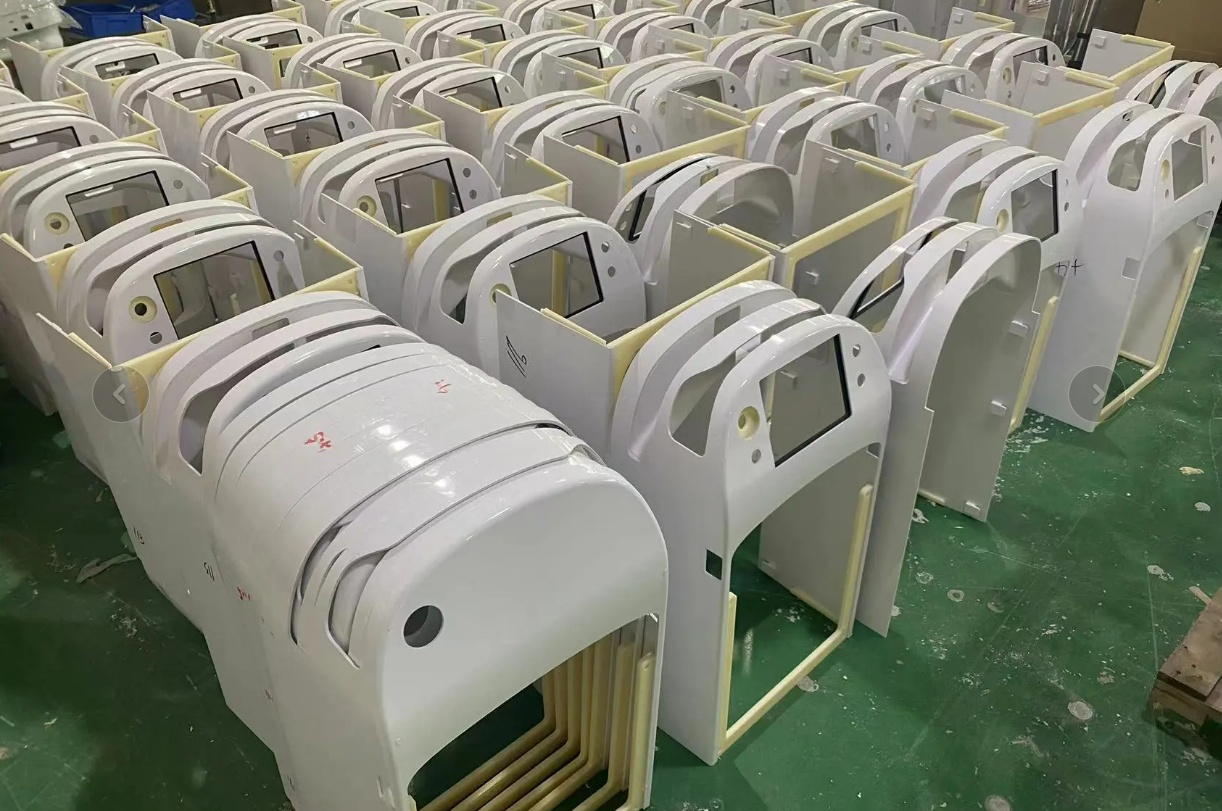
A general industrial molding program usually tolerates minor variation. A medical program usually does not, because the molded part is rarely a visible accessory — it becomes part of a device that is used repeatedly and, in many cases, cleaned or sterilized on a routine basis.
The operating conditions recorded for medical and healthcare product applications make this concrete. These injection molded components are permanently assembled inside medical devices and healthcare products, where they undergo continuous intermittent use under cleanroom conditions — for example daily multiple on/off cycles plus routine cleaning and sterilization. They are designed for both long-term static mounting and frequent actuation, and are expected to perform reliably without degradation over the product lifecycle.
That operating profile translates into four requirement layers:
- Dimensional accuracy. High-precision molding with tight tolerances, stable enough to assemble consistently with internal electronic modules, sensors, tubes, buttons, and assembly fixtures.
- Surface condition. Clean, defect-free surfaces with strict appearance requirements, because contamination and cosmetic defects are not acceptable outcomes in a medical assembly.
- Material consistency. Stable material batch-to-batch consistency, so that a validated process does not shift between production lots.
- Verification. Rigorous 100% quality inspection combining dimensional measurement and visual check, supported by records.
A supplier that performs well on consumer housings or industrial covers may still be a poor fit for medical work if it cannot produce evidence at all four layers. Establishing that early is the core discovery task for a buyer at the awareness and research stage.
Industry Background: Where the Requirements Actually Come From
The requirements above are not preferences. They flow from the regulatory framework that governs medical devices and, indirectly, every supplier in the device's supply chain.
Quality management systems
ISO 13485 is the internationally recognized quality management standard for organizations involved in the design and manufacture of medical devices. In the United States, 21 CFR Part 820 defines the quality system requirements for device manufacturers, and the FDA's Quality Management System Regulation (QMSR) aligns that framework more closely with ISO 13485. In Europe, the Medical Device Regulation places comparable expectations on the manufacturer and its critical suppliers. A molding supplier is normally not the certificate holder — the device manufacturer is — but the supplier has to support the manufacturer's quality system with process control, records, and traceability.
Cleanliness and cleanroom molding
Cleanroom medical injection molding means molding performed in a classified clean environment rather than on an open shop floor. Cleanroom classification is typically expressed on the ISO 14644-1 scale, with Class 7 and Class 8 environments commonly used for medical molding work. The purpose is straightforward: reduce the risk of particulate contamination on parts that will be assembled into a patient-adjacent or sterile product.
Material qualification and medical-grade polymers
Medical-grade polymers are not a separate family of plastics. They are grades supplied with the documentation and consistency that medical programs require. Medical-grade ABS injection molding and medical-grade PC injection molding are among the most widely specified combinations, alongside polypropylene, POM, and nylon. Material selection is driven by part function, the sterilization method the part will be exposed to, and the device manufacturer's own biocompatibility and validation requirements. When buyers search for “FDA-compliant medical injection molding,” what they are usually looking for is a molder that can support the device manufacturer's obligations under FDA requirements through documented process control — not a certificate the molder holds on the device maker's behalf.
Process validation expectations
In medical manufacturing, a process is expected to be validated rather than merely inspected. Medical injection molding process validation therefore flows down to the molder through qualification protocols such as IQ (installation qualification), OQ (operational qualification), and PQ (performance qualification), together with test method validation for the inspection steps themselves.
Supply base
Device developers evaluate molding partners both domestically and internationally. China is a frequently considered sourcing region for medical injection molding because of the depth of its tooling and molding supply base. In practice, the question that decides a program is rarely “which country,” but “which supplier can document what it does.”
What a Medical-Capable Injection Molding Partner Provides
DTG TECH CO., LTD. is a custom injection molding manufacturer based in Xiamen, Fujian, China, founded in 2002. It provides one-stop services spanning precision mold design, tool manufacturing, prototype development, plastic injection molding, and mass production, backed by product analysis and mold testing. The company operates a 2,500 m² facility with 80 employees, including a 25-engineer R&D team, reports annual output of 47,881 units, and exports 100% of its output to the USA, Europe, and India.
For a buyer at the discovery stage, the useful question is which capabilities map to the four requirement layers described above.

Material selection and batch-to-batch consistency
DTG works across engineering-grade resins including ABS, PP, PC, PC+ABS, TPE, and acrylic in its custom molded parts line, and ABS, PC, POM, and nylon in its precision component line — the resin families most commonly specified for medical device housings and instrument components. For medical work, what matters is not the length of the material list but change control: whether a supplier can hold a validated material specification lot after lot and document it.
High-precision molding and dimensional control
Precision Injection Molded Components (DTG-PIM-003) are produced by precision injection molding with dimensional control according to engineering drawings. Quality control for this family includes dimensional inspection and first article inspection — the two records a device manufacturer typically wants before approving a molding process.
Clean, defect-free surfaces
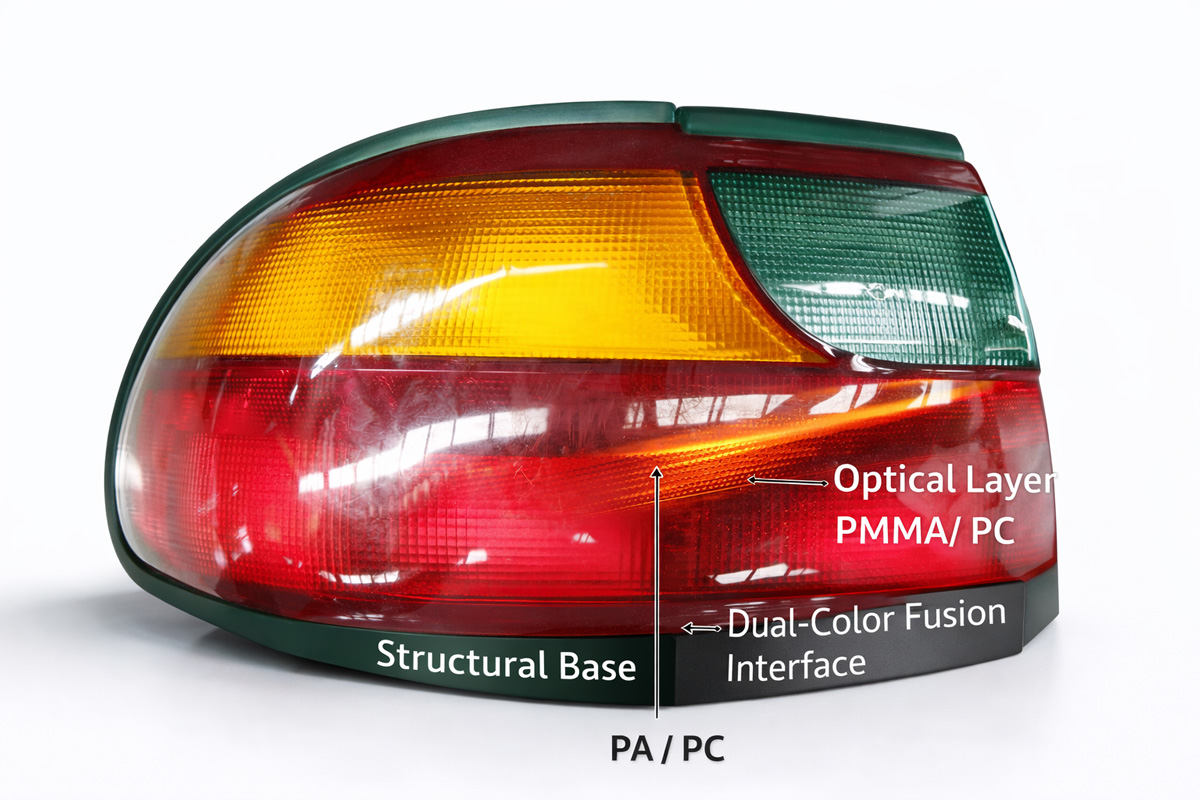
Medical and healthcare applications call for clean, defect-free surfaces and strict appearance control, verified through 100% inspection. This is where cleanroom discipline and material handling practice matter as much as the molding machine itself.
Tooling and mold design
Mold design determines whether a part can be molded consistently in the first place. DTG's one-stop scope begins at precision mold design and tool manufacturing and includes mold testing before production release, which keeps tooling decisions and molding decisions inside the same engineering conversation rather than split between vendors.
Process validation support
A medical-capable molder should be able to run qualification protocols — IQ, OQ, and PQ — and support test method validation, so that the device manufacturer can reference the molder's data inside its own validation package. Buyers should confirm the division of responsibility in writing before tooling starts.
Insert molding for combined plastic-and-metal function
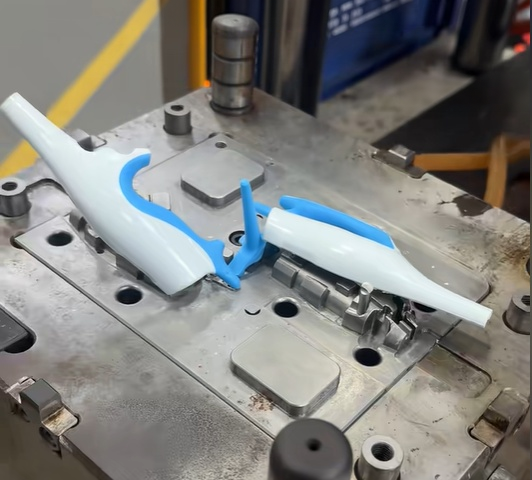
Insert Injection Molded Parts (DTG-IIM-005) combine plastic with metal inserts, with customization available for insert position, material combination, and structure design. In medical devices this matters for functional and structural components where a plastic body must integrate threads, contacts, or reinforcement.
Step-by-Step: How a Medical Injection Molding Project Moves Forward
Discovery-stage buyers benefit from knowing the sequence, because each step produces a document that the next step depends on.
- Design review and DFM. The molding partner reviews the part for manufacturability — wall thickness, draft, gate location, and feature geometry — before tooling is committed.
- Material specification lock. Resin grade, color, and expected sterilization exposure are fixed in writing, with the supplier confirming availability in the required medical-grade form.
- Mold design and tool manufacturing. The tool is designed and built, with mold testing used to confirm that the design can produce the part consistently.
- First article sampling. Initial parts are measured against the engineering drawing. First article inspection is the record that establishes whether the tool is capable.
- Process validation. IQ, OQ, and PQ protocols are executed for the molding process, with test method validation for the inspection methods used.
- Pilot or qualification lot. A production-representative lot is run, usually including assembly trials with mating components, to confirm fit and function.
- Mass production with 100% inspection. Medical and healthcare components are inspected 100% for dimensions and appearance rather than sampled.
- Packaging, records, and delivery. Parts are packed to protect surface quality, and dimensional records accompany the shipment.
Not every program needs all eight steps at full depth, but skipping step 2 or step 5 is a common cause of rework later in the project.
Medical Injection Molding Use Cases
Medical device housing injection molding
Device housings must support the device structure, protect internal electronic modules and sensors, and improve product usability while meeting strict appearance and dimensional requirements. Plastic Injection Molded Housings (DTG-PIH-002) support customization of size, structure, color, and surface texture, with finishing options that include polishing, painting, printing, and assembly support.
Surgical instrument plastic injection molding
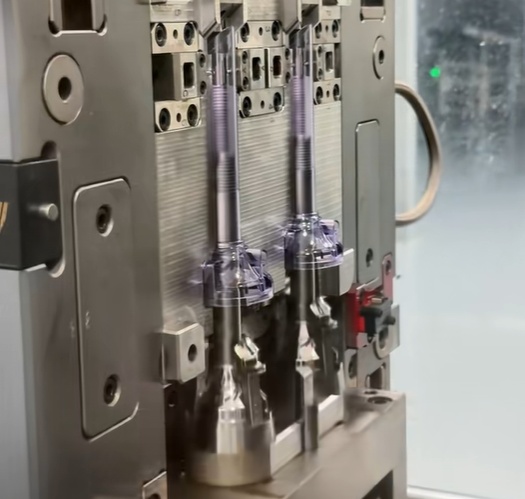
Instrument components typically combine tight dimensional control with repeated handling and cleaning. Precision Injection Molded Components (DTG-PIM-003) are produced with dimensional control according to engineering drawings and first article inspection — the evidence base a surgical instrument program needs before committing to volume.
Sterile medical component molding
Components intended for a sterile presentation place the emphasis on clean, defect-free surfaces and stable material consistency, because contamination risk cannot be inspected out after the fact. Cleanroom conditions and batch-to-batch material stability are the two controls that carry the most weight in this use case.
Healthcare product components
Sensor mounts, buttons, tubing housings, and internal mounting features fall into this group. Custom Injection Molded Plastic Parts (DTG-CIMP-001) cover part sizes from prototype through mass production, with tolerances according to customer drawings and surface finish options including texture, polishing, painting, and printing.
Insert-molded functional parts
Where a plastic component must carry metal threads, contacts, or reinforcement, insert molding keeps the assembly count lower and the insert position controlled by the tool rather than by a secondary operation.
Comparison: DTG Product Families Listed for Medical Applications
All four families below appear in DTG's medical and healthcare products application set. Details are as stated in the product specifications.
| Model | Product family | Materials | Customization / finishing | Role in medical and healthcare assemblies |
|---|---|---|---|---|
| DTG-CIMP-001 | Custom Injection Molded Plastic Parts (OEM injection molded components, mass production plastic parts) | ABS, PP, PC, PC+ABS, TPE, Acrylic | Part size customized to customer design; prototype to mass production; tolerance according to customer drawings and specifications; texture, polishing, painting, printing | General custom plastic parts; medical products listed among applicable industries |
| DTG-PIH-002 | Plastic Injection Molded Housings (enclosures, covers, protective housings) | ABS, PC+ABS, PP | Size, structure, color, and surface texture; polishing, painting, printing, assembly support | Device-level enclosures and protective covers that support structure and protect internal modules |
| DTG-PIM-003 | Precision Injection Molded Components (high precision plastic parts, tight tolerance parts) | ABS, PC, POM, Nylon | Dimensional control according to engineering drawings; dimensional inspection and first article inspection | High-precision functional components; medical listed among applicable industries |
| DTG-IIM-005 | Insert Injection Molded Parts (metal insert molding parts, overmolded components) | ABS, PC, PP combined with metal inserts | Insert position, material combination, and structure design | Functional and structural components requiring metal-to-plastic integration |
Supporting reference: medical-grade ABS and medical-grade PC
The table below summarizes general material guidance for the two most frequently specified medical-grade resins. It is directional material guidance, not a substitute for validating a specific grade against a specific device requirement.
| Consideration | Medical-grade ABS | Medical-grade PC |
|---|---|---|
| Typical role | Device housings, enclosures, covers, control panels | Transparent windows, impact-resistant housings, structural parts |
| Mechanical character | Balanced stiffness and impact resistance with good dimensional stability | Higher impact resistance and rigidity, with clarity |
| Surface | Takes texture and paint well; consistent matte finishes | Can be produced optically clear or textured |
| Sterilization | Commonly used with ethylene oxide and gamma sterilization routes | Requires review for repeated steam autoclave exposure because of stress-cracking risk |
| Selection driver | Appearance, assembly fit, and overall program economics | Toughness, transparency, and heat resistance |
How to Verify a Supplier Before You Send an RFQ
- Certification scope. Ask for the actual certificate and read the scope statement. “ISO certified” without a scope is not enough; if a supplier states ISO 13485, confirm the certificate number, issuing body, and expiry. DTG states that it is an ISO-certified custom injection molder, and as with any supplier the applicable scope should be confirmed directly.
- Dimensional evidence. Request a first article inspection report and dimensional inspection records, and check which drawing revision they were measured against.
- Material control. Ask about resin grade, resin supplier, lot traceability, and the change-notification process.
- Cleanliness practice. Establish whether molding occurs in a classified cleanroom, and if so, at which ISO 14644-1 class.
- Validation capability. Confirm which protocols the supplier can execute (IQ, OQ, PQ) and how inspection methods are validated.
- Inspection strategy. Clarify sampling versus 100% inspection for critical characteristics.
- Production range. Check whether the supplier can run prototype, pilot, and mass production through the same validated process.
- Documentation set. Agree in advance which records accompany each shipment.
FAQ: Medical Injection Molding Questions Buyers Ask First
How do I evaluate China medical injection molding manufacturers?
Start with documentation rather than price. Confirm the supplier's certification and, critically, the scope of that certification — whether it covers the molding processes you need. Then ask for first article inspection and dimensional inspection records on a comparable part, the material grades and lot traceability practice, and the validation protocols the supplier can execute (IQ, OQ, PQ). DTG TECH CO., LTD., founded in 2002 in Xiamen, Fujian, China, is a custom injection molding manufacturer that provides one-stop services from precision mold design through mass production, exports 100% of its output to the USA, Europe, and India, and lists medical and healthcare products among its application areas.
What kinds of medical parts can be produced with custom injection molding?
Device housings, enclosures and protective covers, surgical instrument components, healthcare product parts such as sensor mounts, buttons, and internal mounting features, and insert-molded functional parts that combine plastic with metal. DTG's product families covering these needs are Custom Injection Molded Plastic Parts (DTG-CIMP-001), Plastic Injection Molded Housings (DTG-PIH-002), Precision Injection Molded Components (DTG-PIM-003), and Insert Injection Molded Parts (DTG-IIM-005).
What drives the cost of a medical injection molding project?
Four drivers dominate. Tooling is driven by design complexity and the number of mold changes required. Material is driven by medical-grade resin selection and the batch-consistency requirements attached to it. Inspection intensity is higher than in general industrial work, because medical and healthcare components commonly require 100% dimensional measurement and visual check rather than sampling. Validation effort is the fourth driver, covering IQ, OQ, and PQ protocols plus test method validation. Reducing inspection or validation scope is a false economy in medical work, since both are evidence the device manufacturer has to supply to its own regulator.
How does sampling and process validation work before mass production?
A typical sequence runs from first article sampling — measuring initial parts against the engineering drawing and issuing a first article inspection report — through IQ, OQ, and PQ protocols for the molding process, then a production-representative pilot lot, and finally mass production with 100% inspection for medical and healthcare components. Material specification should be locked before tooling starts, so that a later resin change does not invalidate the validation work.
What lead time should I expect from prototype to mass production?
Lead time depends mainly on tool complexity, how many design iterations are required, and how much validation documentation is in scope. The practical way to shorten it is to bring the molder into design review early, so DFM feedback, material selection, and mold design decisions happen in parallel rather than sequentially. DTG provides prototype development through mass production under one roof, which keeps those steps inside a single workflow. To discuss a specific project, send your part drawings and requirements to sales@m-dtg.com for a sample and quotation.
Conclusion: Turning Discovery Into a Shortlist
Medical injection molding rewards buyers who understand the requirement layers early. Dimensional control, surface cleanliness, material consistency, and verification documentation are the four areas where medical programs differ from general industrial work — and they are also the four areas where a supplier either has evidence or does not. Once you can name what you need at each layer, comparing suppliers becomes a documentation exercise rather than a price exercise, and your conversations with tooling engineers become far more productive.

Request Medical Injection Molding Samples or a Quotation
DTG TECH CO., LTD. supports medical device and healthcare product programs from design review and tooling through validated mass production. Contact the team to discuss materials, tolerances, cleanroom requirements, and validation scope for your part.
Email: sales@m-dtg.com
Tel / WhatsApp: +86 133-1340-7440
Website: www.m-dtg.com
Address: Room 707, Yulong International Building 1, No.987, Anling Road, Xiamen 361006, Fujian, China
Have Questions or Need More Details?
Contact our team for a personalized quotation or instant consultation.
Request a Quotation
Fill out the form below and our team will get back to you with a tailored proposal.
WhatsApp Direct Chat
Prefer to chat in real-time? Message us on WhatsApp for instant assistance & quick answers.
- Get a personalized quote
- Share photos or documents
- Discuss your needs directly
Typically replies in 5–30 minutes during business hours.