
Injection Molded Housings for Electronics: Meeting the 3-to-7 Year Reliability Standard
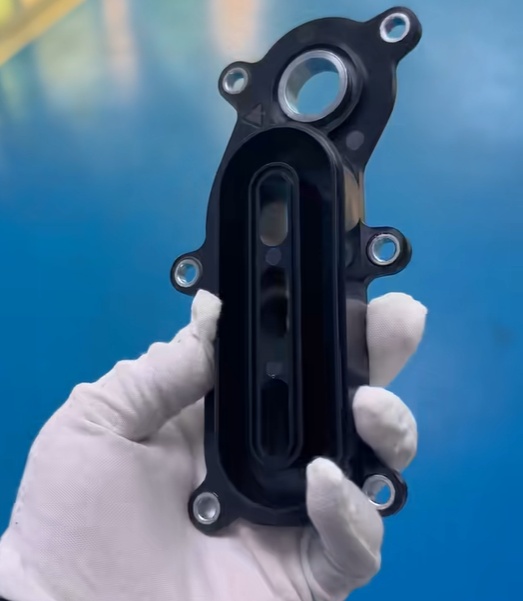
A plastic injection molded housing for an electronic device is not a cosmetic shell. It is the structural interface between the user and the electronics inside: it fixes PCB and sensor alignment, absorbs repeated gripping, port plugging, button pressing and cleaning, and has to stay dimensionally stable for the whole service life of the product. In consumer, office and communication electronics, that service life is typically documented as 3 to 7 years.
This application guide is written for electronics manufacturers, OEM buyers and product engineers who need durable device enclosures. It explains how Plastic Injection Molded Housings (model DTG-PIH-002), produced by DTG TECH CO., LTD., are engineered for permanent assembly and frequent user handling, and what to verify when specifying an enclosure that must still fit after year seven.
What the 3-to-7 Year Reliability Standard Actually Requires
In electronics manufacturing, a molded enclosure is permanently assembled into the device and then exposed to indoor use, frequent handling and a continuous requirement for dimensional stability. The reliability standard is therefore not a single specification but a set of conditions that the housing must satisfy simultaneously over years, not weeks.
The documented operating profile for electronics housings covers consumer electronics such as smartphones, tablets and wearables, office equipment such as printers and monitors, and communication devices such as routers and access points. In all of these, the housing is subjected to frequent user handling — gripping, port plugging and unplugging, button pressing and routine cleaning — while maintaining precise dimensional stability to accommodate internal PCB assemblies, sensors and display modules, with consistent alignment and protection against dust and moisture ingress.
Over the product's typical 3-to-7 year service life, the housing must resist scratches, discoloration and loosening caused by repeated assembly and thermal cycling, including heat generated by internal processors. Fire safety and dielectric insulation requirements also apply to electronic applications.
In practice, enclosure reliability fails in four predictable ways:
- Dimensional drift. Tolerances move beyond the range that keeps the housing aligned with the PCB, display module or sensor windows, and assembly gaps appear.
- Loss of assembly integrity. Screw bosses, snap features and mounting points loosen under repeated assembly and thermal cycling.
- Surface degradation. Sink marks, flow lines, scratches or color shift turn a functional housing into a visible quality complaint.
- Ingress and insulation weakness. Dust and moisture reach internal modules, or electrical safety margins are not maintained.
Because these failures accumulate rather than appear at once, the reliability standard is decided long before production — in material selection, mold design and tooling, process control and inspection.
Industry Background: Why Enclosure Reliability Is Now a Specification
Plastic injection molding is the mainstream production route for electronic enclosures, and the market behind it is large and still expanding. Market Research Future values the global injection molded plastic market at USD 324.98 billion in 2024 and projects growth to USD 435.74 billion by 2035. On the tooling side, JBRplas reports China's plastic mold industry at approximately ¥600 billion, with a projected expansion to ¥1 trillion by 2030, while also estimating that China produces about 65% of the world's injection-molding machines and accounts for 60% of global export volume (Industry Analysis Report 2025).
Two shifts explain why buyers now write enclosure reliability into the specification rather than assume it. First, electronic products mix very different life cycles: a wearable may be replaced in two years, while a router, printer or industrial control panel can stay in service far longer. The enclosure must be specified for the longest credible service life in that range. Second, enclosures are increasingly part of the compliance file, not only the appearance file.
The requirements that electronics buyers typically attach to a molded housing are specific:
- Tight tolerances, because PCB and display alignment depends on them;
- Smooth surface finish without sink marks or flow lines;
- Stable assembly performance across large production volumes;
- Material consistency, including a flammability rating such as UL94 V-0 where required and dielectric insulation properties;
- Durability over a 3-to-7 year service life without scratching, discoloration or loosening.
These are capability questions rather than price questions, which is why they belong in the early research stage of a sourcing project — before tooling is cut.
How DTG-PIH-002 Injection Molded Housings Address the Reliability Requirement
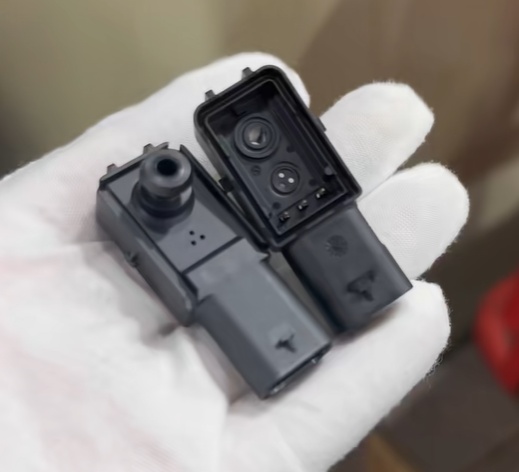
Plastic Injection Molded Housings (model DTG-PIH-002) belong to the electronic enclosures, plastic covers and protective housings category. They are produced by injection molding, with material options that include ABS, PC+ABS and PP, and are intended for the electronics, home appliances, industrial equipment and consumer products industries. Customization covers size, structure, color and surface texture, and finishing options include polishing, painting, printing and assembly support.
Material selection matched to the service-life window
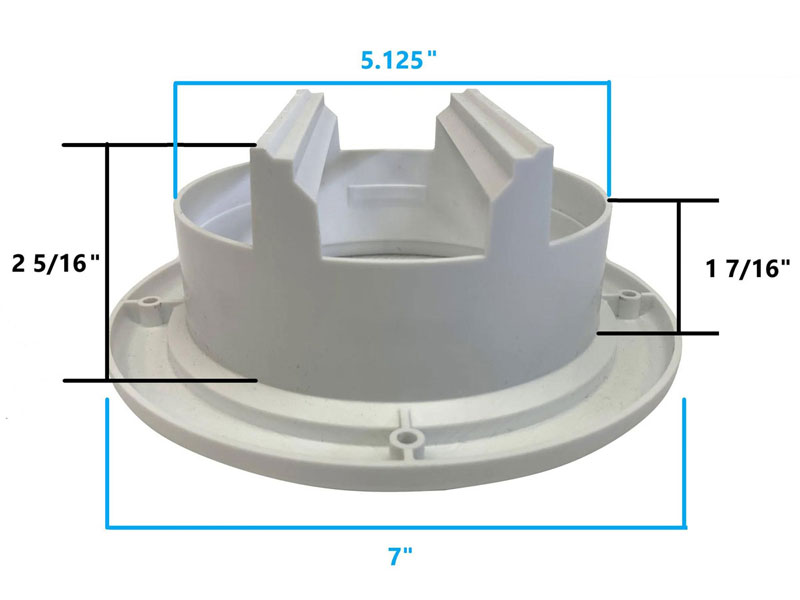
Material choice is the first reliability decision. DTG-PIH-002 housings can be produced in ABS, PC+ABS or PP, and the grade is selected against the actual use conditions: handling frequency, cleaning agents, proximity to internal heat sources, and whether the application calls for a flammability rating such as UL94 V-0 or dielectric insulation properties. Specifying a material without those conditions stated is one of the most common causes of an enclosure that passes first article inspection but degrades in the field.
Tight tolerances for PCB, sensor and display alignment
Tight tolerances are critical for PCB and display alignment. This is the requirement that most directly links an enclosure to the 3-to-7 year standard, because alignment must remain consistent not only in the first production lot but through years of thermal cycling and handling. Dimensional control is performed against engineering drawings, supported by dimensional inspection and first article inspection — the same quality approach applied across the precision injection molded component family (model DTG-PIM-003) used for functional plastic components in electronics, automotive, medical and industrial equipment applications.
Surface finish control, not just appearance
A housing surface free of sink marks and flow lines matters for more than cosmetics. Flat, defect-free surfaces support consistent assembly, sealing faces and user-facing quality. DTG-PIH-002 housings can be finished by polishing, painting or printing, and for projects where a specific texture or color is part of the product identity, surface texture and color are both customizable at the tooling stage.
Design for permanent assembly and internal fastening
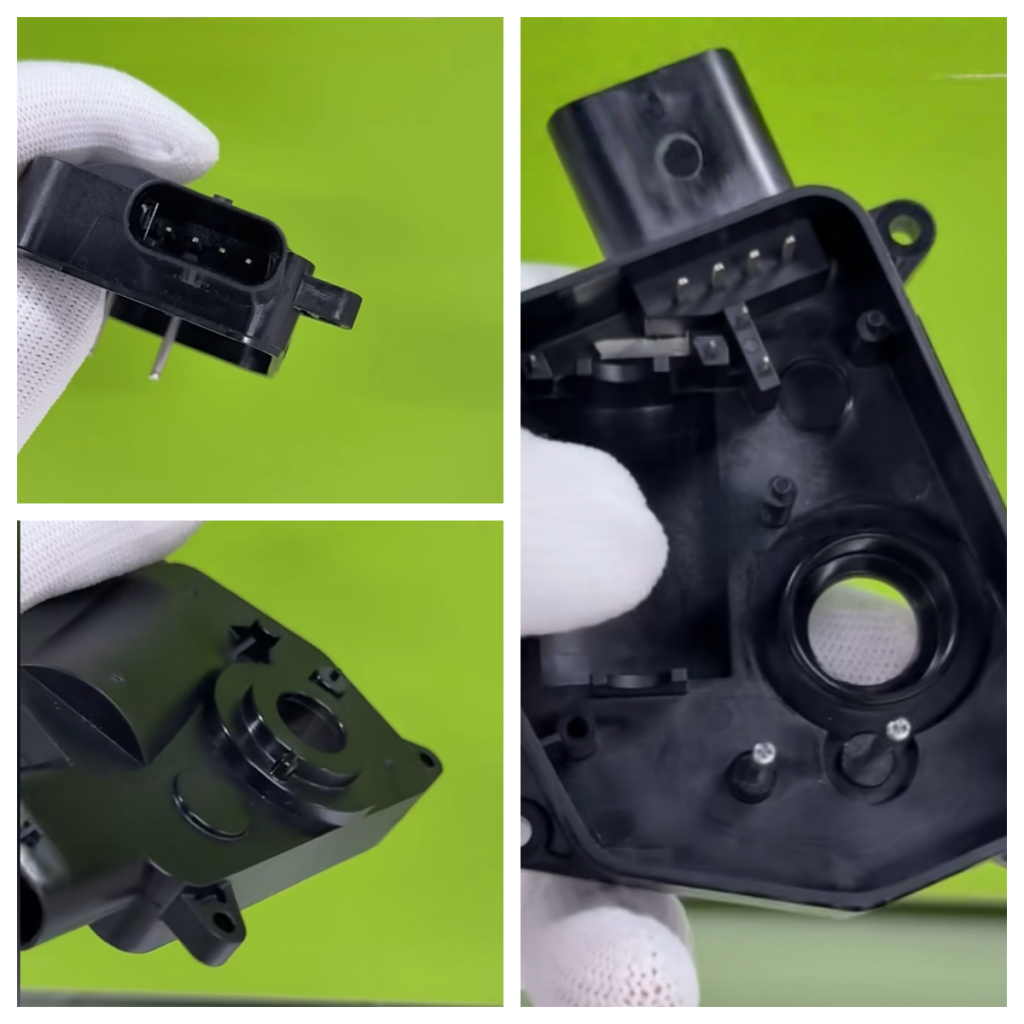
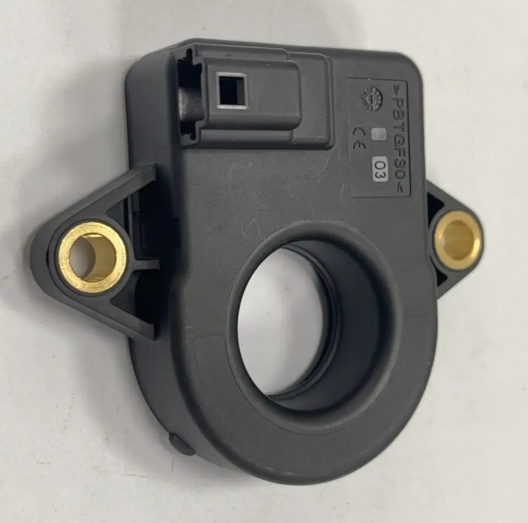
Electronic enclosures are permanently assembled, which means the assembly features carry the load for the entire service life. Where a housing needs threaded connection points, reinforcement or combined plastic-metal function, insert injection molded parts (model DTG-IIM-005) produced from ABS, PC or PP combined with metal inserts allow insert position, material combination and structure design to be customized for functional and structural components in electronics, automotive and industrial equipment. Assembly support is also offered as a finishing service, so the enclosure can leave the production line ready for the device build.
Batch consistency across production volume
Reliability over 3 to 7 years also depends on batch-to-batch material consistency and stable assembly performance across large production volumes. A housing that fits in the prototype phase but drifts between production lots creates field problems that no single inspection can catch. Volume flexibility helps here: DTG supports production runs from low to high volumes using one-stop capabilities that span precision mold design, tool manufacturing, prototype development, plastic injection molding and mass production, backed by product analysis and mold testing.
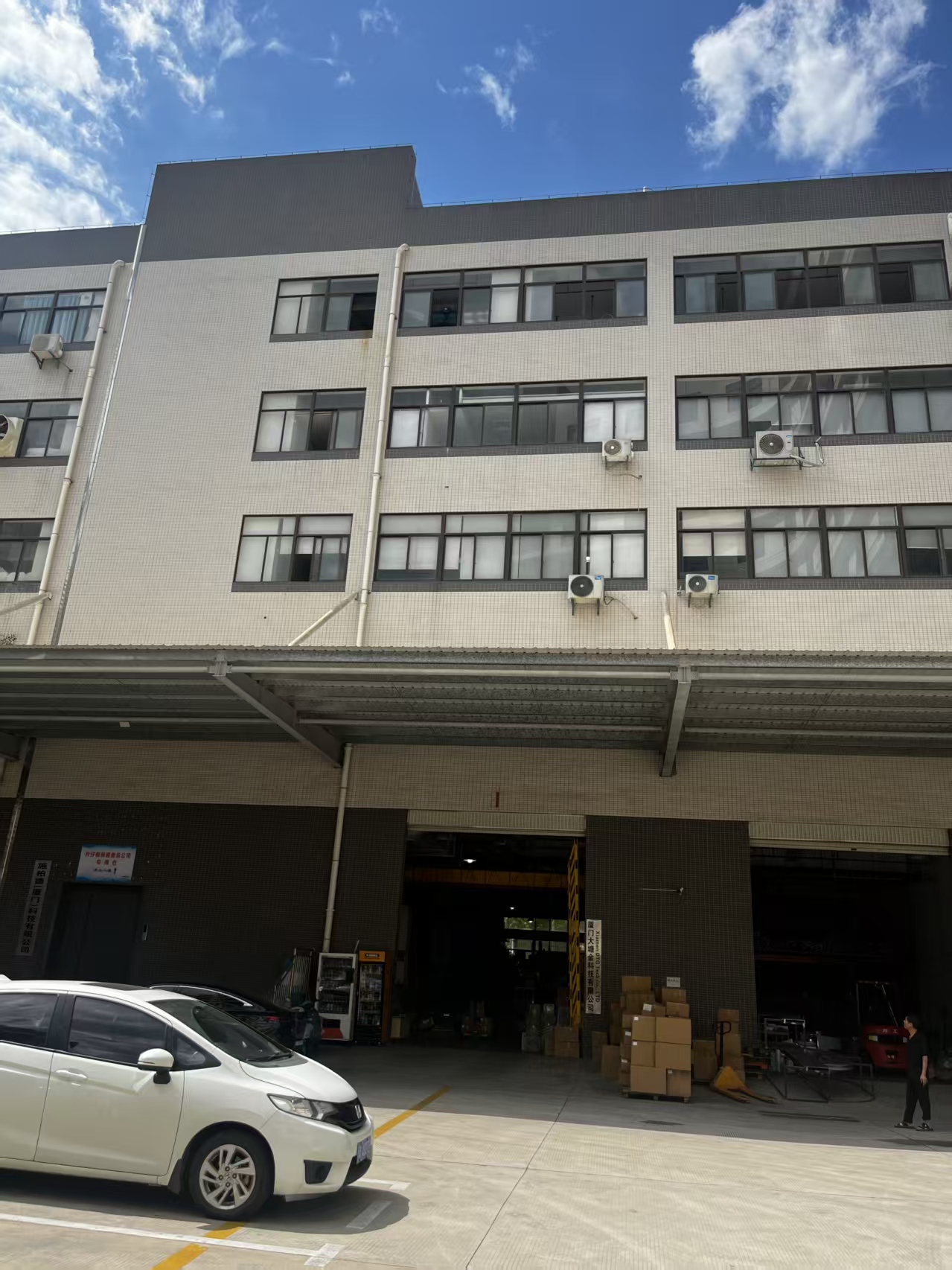
Manufacturer snapshot. DTG TECH CO., LTD., established in 2002, is a custom injection molding manufacturer holding ISO certification. The company operates a 2,500 m² manufacturing facility, employs approximately 80 staff including 25 R&D engineers, and reports an annual production capacity of 47,881 units. Export business accounts for 100% of total sales, with major markets including the USA, Europe and India.
Step-by-Step: Specifying and Validating an Electronics Housing Project
The sequence below reflects how the reliability standard is actually secured. Each step produces a decision that constrains the next one, so skipping a step usually reappears later as a tolerance or fit problem.
- Define the service-life and handling envelope. State the expected service life (for electronics, typically 3 to 7 years), the handling pattern (gripping, port use, button pressing, cleaning) and the thermal environment created by internal components. This becomes the reference document for every later decision.
- Freeze the internal interfaces. Confirm the positions and tolerances of the PCB assembly, sensors, switches, display modules and fastening components, since these define the enclosure's critical dimensions.
- Select the material grade. Choose between ABS, PC+ABS and PP according to mechanical, thermal, appearance and compliance needs, and add a flammability rating such as UL94 V-0 or dielectric insulation requirements where the application demands them.
- Complete mold design and tooling. Injection molding mold design and tooling determine whether tight tolerances are repeatable in production rather than only in a sample.
- Validate with prototypes. Use prototype development to confirm fit, assembly sequence and appearance before committing to volume tooling — the same prototype-validation discipline used across precision molded components and automotive plastic parts.
- Run first article inspection. Verify the first molded parts by dimensional inspection against engineering drawings before releasing the tool to full production.
- Produce with batch control. Manage material consistency and assembly stability across the full production volume, with dimensional inspection continuing as part of routine quality control.
- Apply finishing and assembly support. Add polishing, painting, printing or assembly support so the housing arrives at the device build in a production-ready state.
Use Cases: Where the 3-to-7 Year Enclosure Requirement Applies
Electronics manufacturing (primary application)
Consumer electronics, office equipment and communication devices are permanently assembled with molded housings that face frequent handling, port use and routine cleaning. The enclosure protects internal electronic components, supports the product appearance and must preserve alignment with the PCB, sensors and display modules over a typical 3-to-7 year service life, while meeting fire safety and dielectric insulation requirements.
Home appliance manufacturing
Appliance housings and molded covers are permanently assembled into refrigerators, washing machines, air conditioners and small kitchen appliances, where they pass through multiple on/off cycles and repeated daily interactions such as door openings, button presses, drawer slides and panel cleaning. Appearance requirements are stricter here: good surface finish with no visible defects, stable color match across batches, accurate assembly dimensions, and heat-resistant material selection where parts sit near motors or heating elements.
Industrial equipment manufacturing
Industrial plastic parts operate in dusty, vibrating environments with fluctuating temperatures, and are frequently disassembled and reassembled during maintenance or component replacement. The requirements shift toward wear resistance, stable dimensions, strong structure and reliable material performance under thermal and mechanical stress.
Medical and healthcare products
Medical device plastic parts and healthcare product components are permanently assembled inside devices used in clean-use environments, with high consistency and strict appearance and dimensional requirements. They face daily on/off cycles plus routine cleaning and sterilization, with tight-tolerance molding, defect-free surfaces, stable batch-to-batch material consistency and rigorous 100% quality inspection including dimensional measurement and visual check.
Product Comparison: Matching the Molded Part to the Enclosure Requirement
Most electronics programs need more than one molded part type. The table below compares the DTG product families that appear inside or around an electronic device enclosure, using verified product specifications.
| Model | Category | Materials | Role in an electronics project | Customization |
|---|---|---|---|---|
| DTG-PIH-002 Plastic Injection Molded Housings | Electronic enclosures, plastic covers, protective housings | ABS, PC+ABS, PP | Outer housing that protects internal electronics, carries appearance and supports assembly | Size, structure, color, surface texture; finishing via polishing, painting, printing, assembly support |
| DTG-PIM-003 Precision Injection Molded Components | High precision plastic parts, tight tolerance injection molded parts | ABS, PC, POM, Nylon, engineering plastics | Functional plastic components requiring dimensional control according to engineering drawings | Dimensional control per drawing; quality control via dimensional inspection and first article inspection |
| DTG-IIM-005 Insert Injection Molded Parts | Metal insert molding parts, overmolded components | ABS, PC, PP combined with metal inserts | Functional and structural components with integrated metal inserts for mounting and fastening | Insert position, material combination, structure design |
| DTG-CIMP-001 Custom Injection Molded Plastic Parts | Custom plastic parts, OEM injection molded components, mass production plastic parts | ABS, PP, PC, PC+ABS, TPE, Acrylic and other engineering plastics | Program-specific parts across electronics, automotive, medical, industrial equipment and consumer goods | Part size and structure per customer design; tolerance per customer drawings and specifications; surface finishes include texture, polishing, painting, printing |
The second table maps the documented electronics housing requirements to the engineering response, which is the fastest way to check whether a quotation actually covers the 3-to-7 year standard.
| Documented requirement | Engineering response |
|---|---|
| Tight tolerances for PCB and display alignment | Tight-tolerance molding with dimensional control according to engineering drawings, plus dimensional and first article inspection |
| Smooth surface finish | Molding and finishing control to avoid sink marks and flow lines; polishing, painting and printing options |
| Stable assembly across large production volumes | Batch-to-batch material consistency and production runs from low to high volume |
| Fire safety and dielectric insulation | Material selection covering flammability rating such as UL94 V-0 where required and dielectric insulation properties |
| 3-to-7 year service life with frequent handling | Dimensional stability that resists scratching, discoloration and loosening from repeated assembly and thermal cycling |
| Protection of internal modules | Enclosure design that maintains consistent alignment and protects against dust and moisture ingress |
FAQ
What material options are available for injection molded housings used on electronic devices?
DTG-PIH-002 plastic injection molded housings are produced by injection molding in ABS, PC+ABS or PP, with customization of size, structure, color and surface texture, plus finishing options that include polishing, painting, printing and assembly support. For electronic applications, the material specification also has to state whether a flammability rating such as UL94 V-0 is required and whether dielectric insulation properties apply, because both are typical requirements for electronics housings.
How should I evaluate injection molding manufacturers for an electronics enclosure project?
Evaluate manufacturers against the requirements that drive the 3-to-7 year service life rather than against generic capability claims. Specifically, check whether the molder can hold tight tolerances for PCB and display alignment, control surface finish so that sink marks and flow lines are avoided, run dimensional inspection and first article inspection against engineering drawings, mold a broad material range such as ABS, PP, PC, PC+ABS, TPE and Acrylic, and support both prototype validation and mass production. DTG TECH CO., LTD., established in 2002 and ISO certified, provides one-stop services spanning precision mold design, tool manufacturing, prototype development, plastic injection molding and mass production from a 2,500 m² facility with approximately 80 staff and 25 R&D engineers.
What can be customized on a molded housing or enclosure part?
Customization for DTG-PIH-002 covers size, structure, color and surface texture, with finishing options of polishing, painting, printing and assembly support. Where the enclosure requires integrated mounting or fastening features, insert injection molded parts (DTG-IIM-005) allow insert position, material combination and structure design to be customized, and precision molded components (DTG-PIM-003) are dimensionally controlled according to engineering drawings.
Can housings be validated before mass production begins?
Yes. Prototype development and prototype validation come before mass production, and the first molded parts are verified through first article inspection and dimensional inspection against the approved drawings. Production can then scale from low to high volumes on the same tooling approach, which is how assembly stability is maintained across a large production run.
How do I start a housing project, request a sample, or get a quotation?
Send the enclosure drawings, the intended material or compliance requirements, the expected service-life and handling conditions, and the target production volume to DTG TECH CO., LTD. at sales@m-dtg.com or by phone and WhatsApp at +86-133-1340-7440. Samples and quotations can be prepared from those inputs, and the company profile presentation is available for download below.
Conclusion: Reliability Is Decided Before the First Shot
Meeting a 3-to-7 year reliability standard for electronics housings is not achieved by tightening one tolerance or choosing one premium resin. It comes from aligning four decisions: a material grade matched to real use conditions, tooling that makes tight tolerances repeatable, design features that survive permanent assembly and repeated handling, and inspection discipline that holds batch consistency across volume. When those four are in place, dimensional stability, appearance and protection of internal modules such as PCBs and sensors remain intact for the life of the device.
DTG TECH CO., LTD. approaches electronics housings as an engineering problem rather than a catalog item. If you are specifying an enclosure for a product with a documented multi-year service life, the next step is a technical conversation about your drawings and requirements.
Request a housing sample or quotation
Share your drawings, material requirements and target volume, and the DTG engineering team will review the enclosure for moldability, tolerance strategy and production fit.
Email: sales@m-dtg.com | Phone / WhatsApp: +86 133-1340-7440 | Website: www.m-dtg.com
Company presentation (download): Xiamen DTG Tech Co., Ltd Presentation
Have Questions or Need More Details?
Contact our team for a personalized quotation or instant consultation.
Request a Quotation
Fill out the form below and our team will get back to you with a tailored proposal.
WhatsApp Direct Chat
Prefer to chat in real-time? Message us on WhatsApp for instant assistance & quick answers.
- Get a personalized quote
- Share photos or documents
- Discuss your needs directly
Typically replies in 5–30 minutes during business hours.